
Quo Vadis, or where are we going with sustainable development? (Fifth part) (English version at the end of this article)
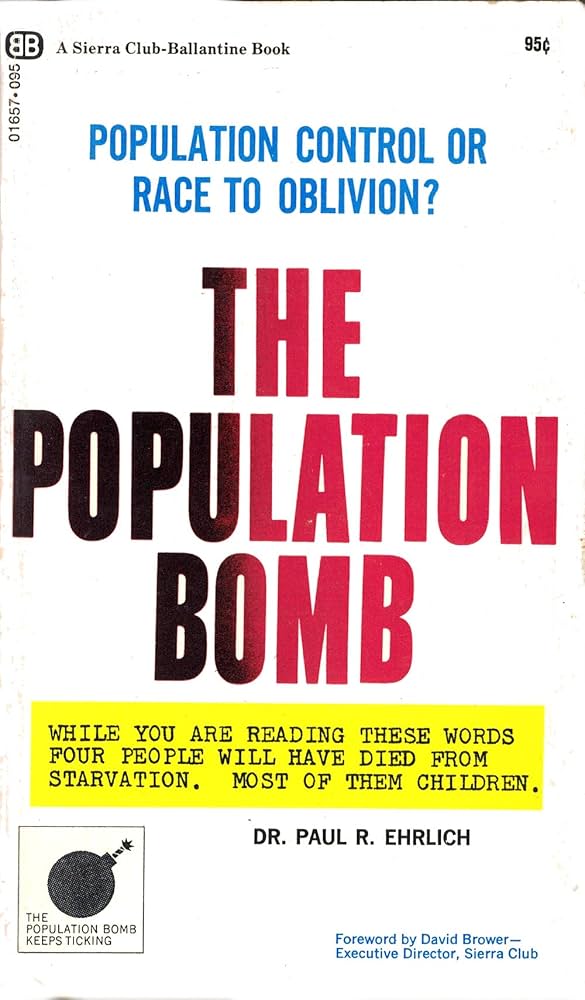
Raportul „Modelul regionalizat și adaptiv al sistemului mondial global” (1973) al Clubului de la Roma, cu viziunea sa de a unifica lumea sub un guvern mondial (sistem mondial ori sat global) și de a o împărți în zece regiuni sau regate, și-a găsit ecoul în proiectul Băncii Mondiale pentru Conservare (1986). Politica de conservare a mediului, alături de zonele sale de conservare transfrontaliere, numite și parcuri ale păcii, au fost „pașaportul verde” al acestei viziuni născută în mare parte din teama de Bomba Demografică (Paul R. Ehrlich) și de un final apocaliptic.
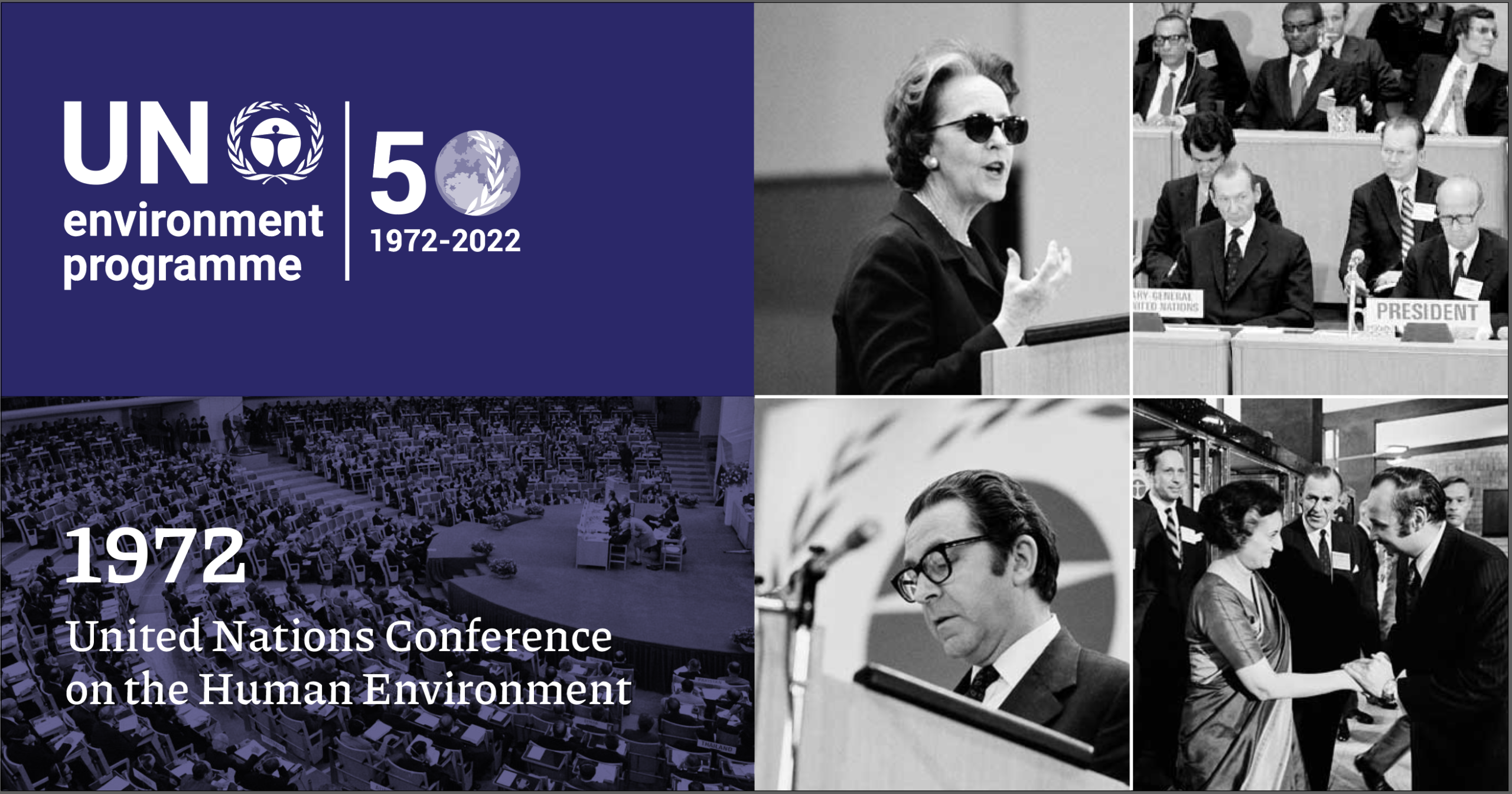
Profeții Apocalipsei, cadrele universitare și mulți dintre cei mai importanți oameni de știință ai lumii ne avertizaseră deja, la scurt timp după conferința de la Stockholm, că Ziua Judecății de Apoi e aproape (vezi Intro-ul din Interviul cu Maurice Strong, BBC, 1972). Dar dacă se vorbește despre o Apocalipsă a mediului și despre un regat cu zece regiuni, cine ar fi regele? Ce parte a lumii ar fi salvată și care nu? Și, în final, cât de reală este această Apocalipsă?
1. Mișcarea de conservare din India
Semne ale unei mișcări de conservare au putut fi găsite și în India, fiind legate de dominația britanică și de prăbușirea standardelor tradiționale: „Respectul pentru natură – și protejarea activă a mediului – are rădăcini străvechi în India. Edictele regale ale împăratului Ashoka, datând din secolul al III-lea î.Hr., prevăd liste de specii sălbatice care trebuie protejate cu strictețe și interdicții privind protejarea pădurilor.
(…) În secolul trecut, a existat o prăbușire sistematică a normelor tradiționale de protecție a mediului. Aceasta s-a datorat parțial presiunilor tot mai mari ale unei populații în plină expansiune și destrămării tabuurilor religioase și sociale. Adevărata rădăcină a problemelor de astăzi, însă, se întoarce la stăpânirea britanică, când pădurile au fost luate de la comunitățile sătești, care le foloseau și le protejau, pentru a fi exploatate sistematic în scopuri comerciale, pentru a satisface nevoile imperiale. Din păcate, guvernul de după obținerea independenței în India a continuat să trateze pădurile în primul rând ca pe o sursă de venit a statului. Comunitățile sătești au rămas neputincioase în timp ce resursele bunăstării lor se pierdeau” (vezi Dilnavaz Variava, INDIA—MIȘCAREA DE CONSERVARE, în For the Conservation of Earth: Proceedings of the 4th World Wilderness Congress, p. 150).
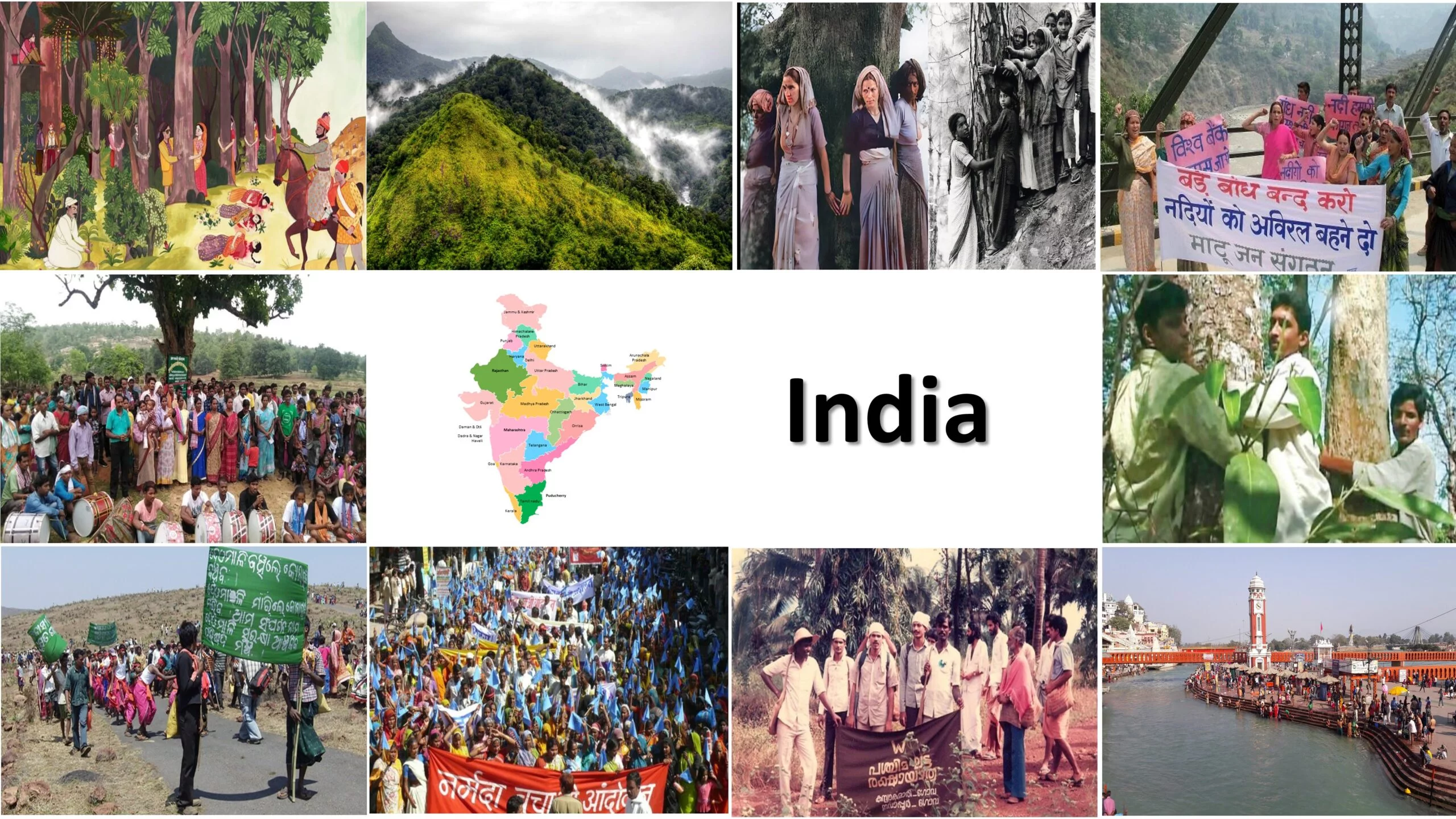
Spre deosebire de alte mișcări occidentale de conservare a naturii, cea din India nu a avut implicații ideologice, nefiind legată nici de vreo rețea a elitelor, nici de facțiuni politice de dreapta sau de stânga, așa cum s-a întâmplat în Africa. Inițial, a apărut mai mult din nevoia reală a comunităților sătești de a-și apăra pădurile de exploatarea nesăbuită a britanicilor în numele eficienței. O luptă pentru eliberare de sub dominația britanică pe care hindușii o purtaseră de secole, încă de pe vremea când William Wilberforce critica Compania Indiilor Orientale în Parlamentul britanic pentru abolirea sclaviei. Acest lucru face din India un caz particular în ceea ce privește conservarea (Wikipedia, William Wilberforce. De asemenea, vezi și filmul Amazing Grace, 2006).
Singura instituție cu care mișcarea a fost legată încă de la început este Bombay Natural History Society (BNHS) – și pe bună dreptate, căci rădăcinile sale se află în istorie, în nevoia fundamentală de eliberare a hindușilor, care este înrădăcinată în mentalitatea lor colectivă.
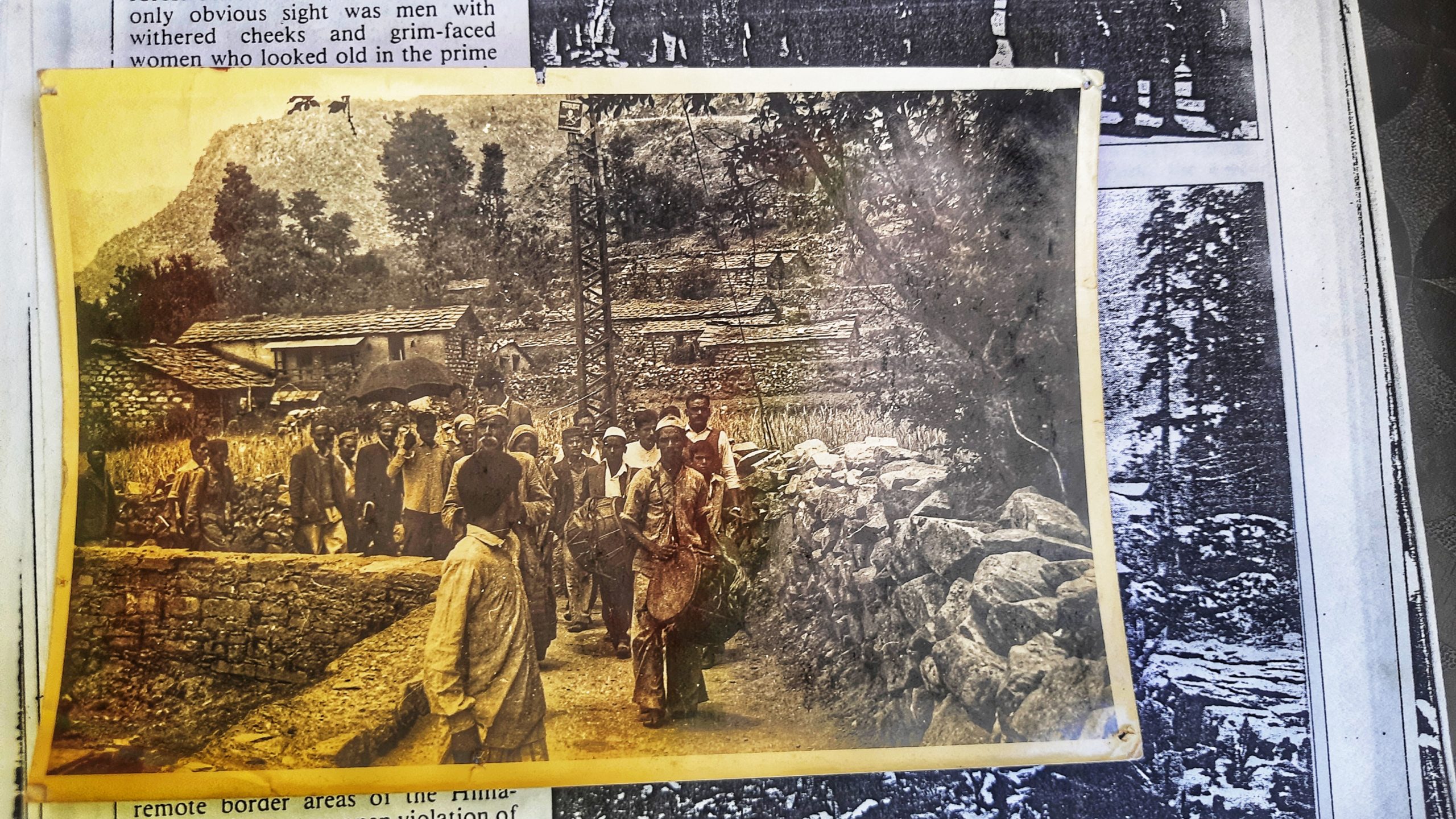
Aceasta l-a transformat pe Chandi Prasad Bhatt într-un eliberator ale cărui acțiuni, ani mai târziu, au contribuit la declanșarea mișcării de conservare Chipko. În zona Garhwal, sat după sat, femeile îl implorau pe Bhatt „să le viziteze și să le ajute să își reîmpădurească terenurile”. Ele au îmbrățișat copacii ca pe o formă de protest împotriva exploatării forestiere comerciale și a politicilor guvernamentale privind defrișările. Părea puțin feminist. Dar, în ciuda etichetei sale eco-feministe, datorită implicării în mare parte a femeilor sau a reputației sale eco-socialiste, datorată lui Bhatt, mișcarea Chipko Andolan nu avea nicio doctrină eco-fascistă în spate (Wikipedia, Chipko movement și Chandi Prasad Bhatt).
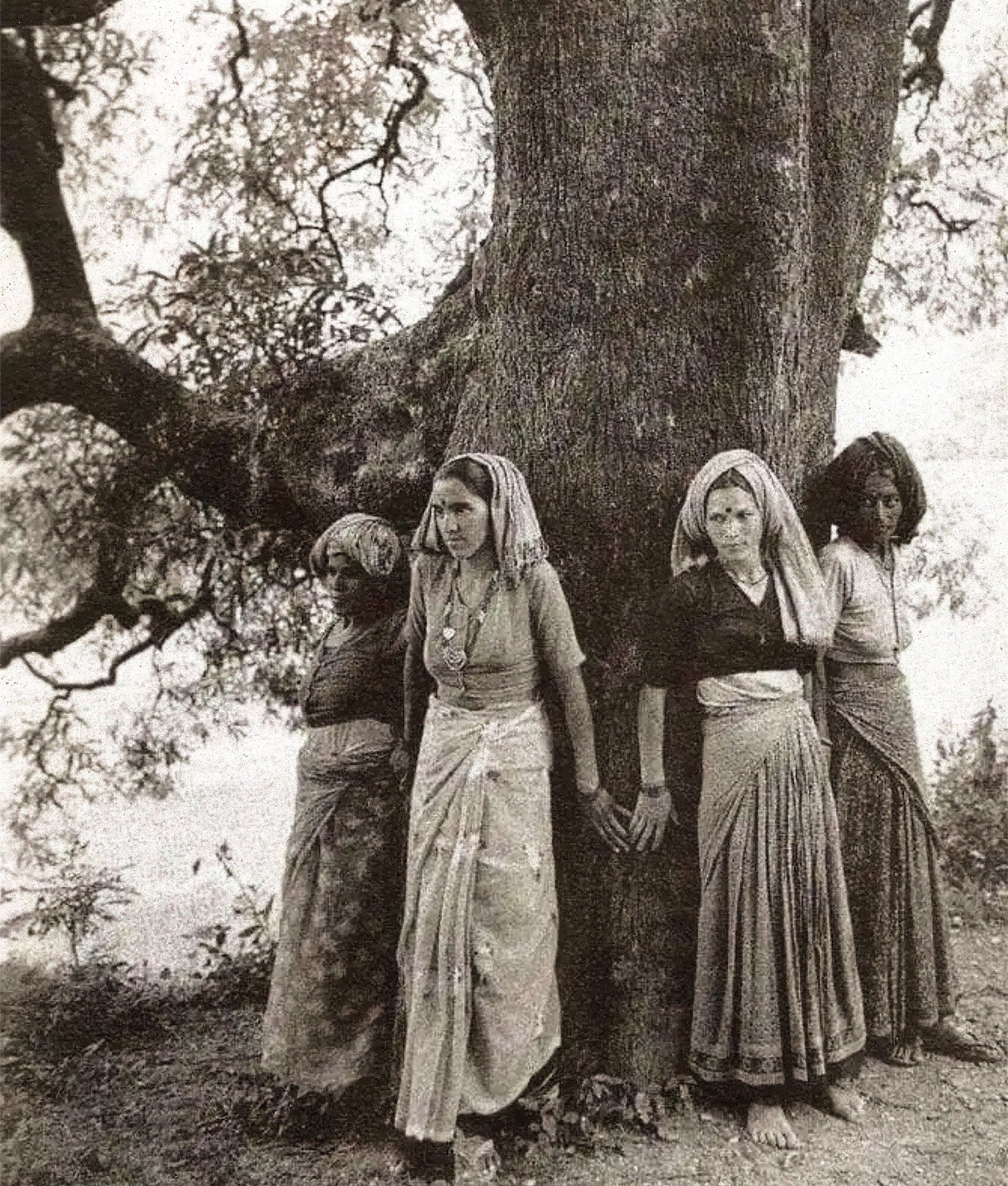
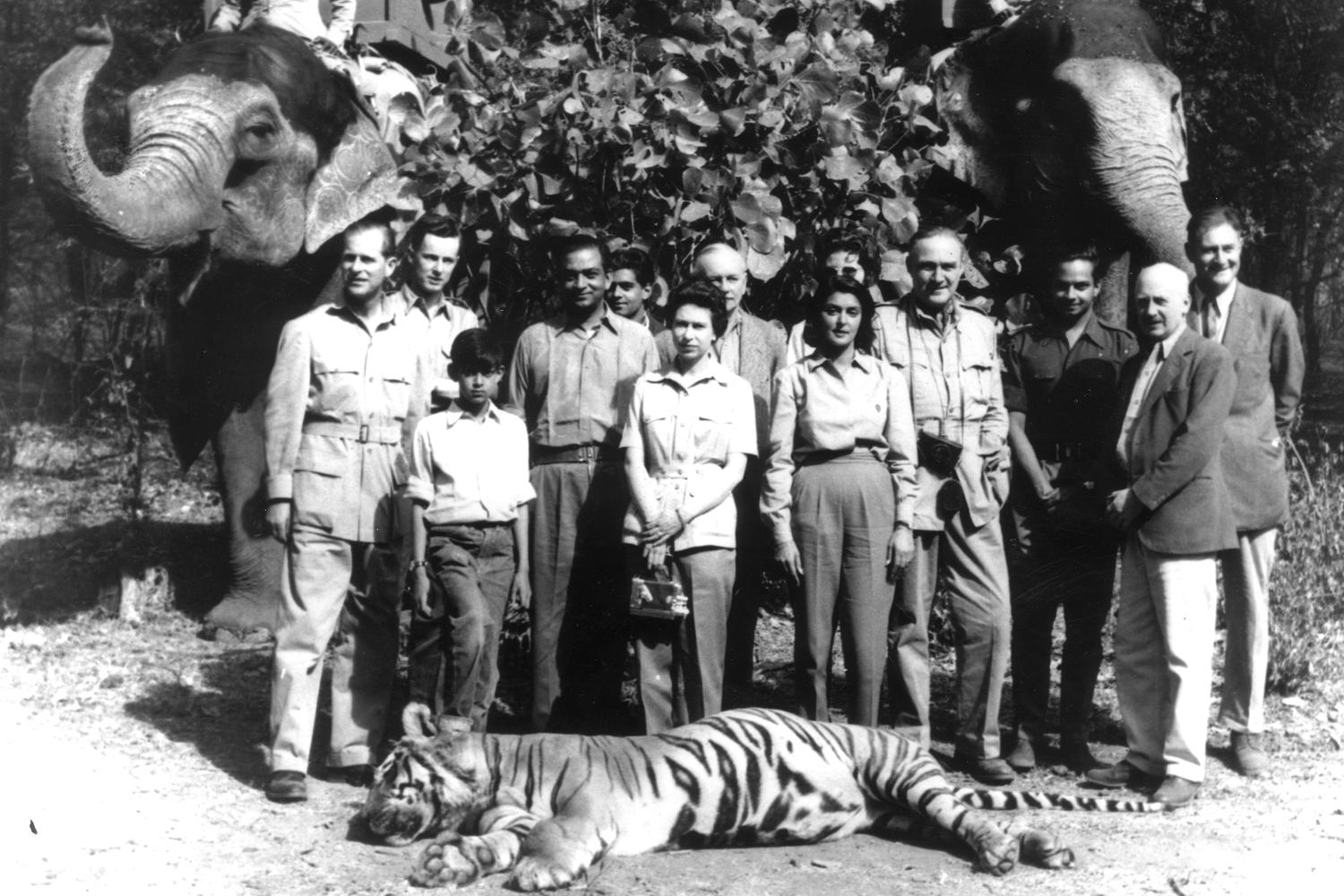
Totuși, dacă ar fi să stabilim o legătură, ea ar putea fi urmărită până la primele expediții de tip safari ale familiei regale britanice din anii ’60 și până la înființarea filialei World Wildlife Fund, la 27 noiembrie 1969, în New Delhi – integrând mișcarea Chipko în trendul ecologist global.
- Mișcarea „Salvați Valea Tăcută”
Mișcarea Chipko a arătat că mediul înconjurător era mai important decât dezvoltarea urbană. Această tensiune a crescut considerabil odată cu propunerea din ’74 privind un proiect hidroelectric de înaltă tehnologie în Silent Valley din statul Kerala. Controversa a fost următoarea: Cum ar putea fi implementat proiectul fără a deteriora pădurile tropicale veșnic verzi din Silent Valley?
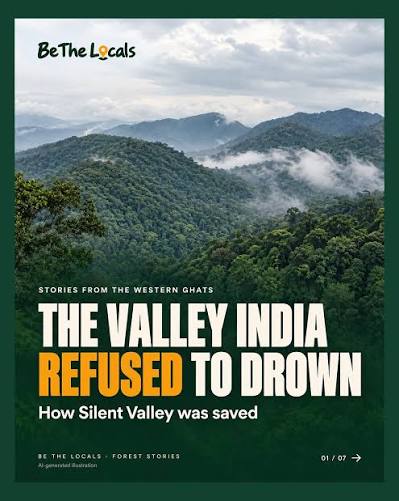
Un studiu realizat de Institutul de Cercetări Forestiere din Kerala (’77) concluzionează că ridicarea unui baraj hidroelectric peste râul Kunthi ar provoca pagube, ceea ce duce la rejectarea proiectului: „În 1974, construcția barajului hidroelectric Idukki era aproape de finalizare, iar guvernul statului căuta noi proiecte hidroelectrice pentru a satisface nevoile de energie ale statului. Consiliul de Electricitate al Statului Kerala a înaintat o propunere guvernului pentru construirea unui baraj hidroelectric în Silent Valley, districtul Palakkad. În 1977, guvernul a acceptat propunerea și a decis să continue proiectul. În același an, Institutul de Cercetare Forestieră din Kerala, în Peechi, lângă Thrissur, a realizat un studiu privind posibilul impact al barajului asupra pădurilor din zonă. Studiul a concluzionat că proiectul ar distruge complet pădurile tropicale veșnic verzi din Silent Valley” (The Wire, Nissam Syed).
„Așa cum se întâmplă adesea, ecologiștii și-au dat seama de existența acestei zone – și de efectele devastatoare ale proiectului hidroelectric propus – într-un moment în care proiectul fusese deja aprobat de Comisia de Planificare pentru implementare. De fapt, lucrările preliminare la baraj începuseră deja în 1973, dar între 1976-1977, un grup de lucru sponsorizat de guvern pentru Protecția Gațiilor de Vest (eng. Western Ghats), condus de dl. Zafar Futehally, a recomandat abandonarea proiectului” (Dilnavaz Variava, p. 153).
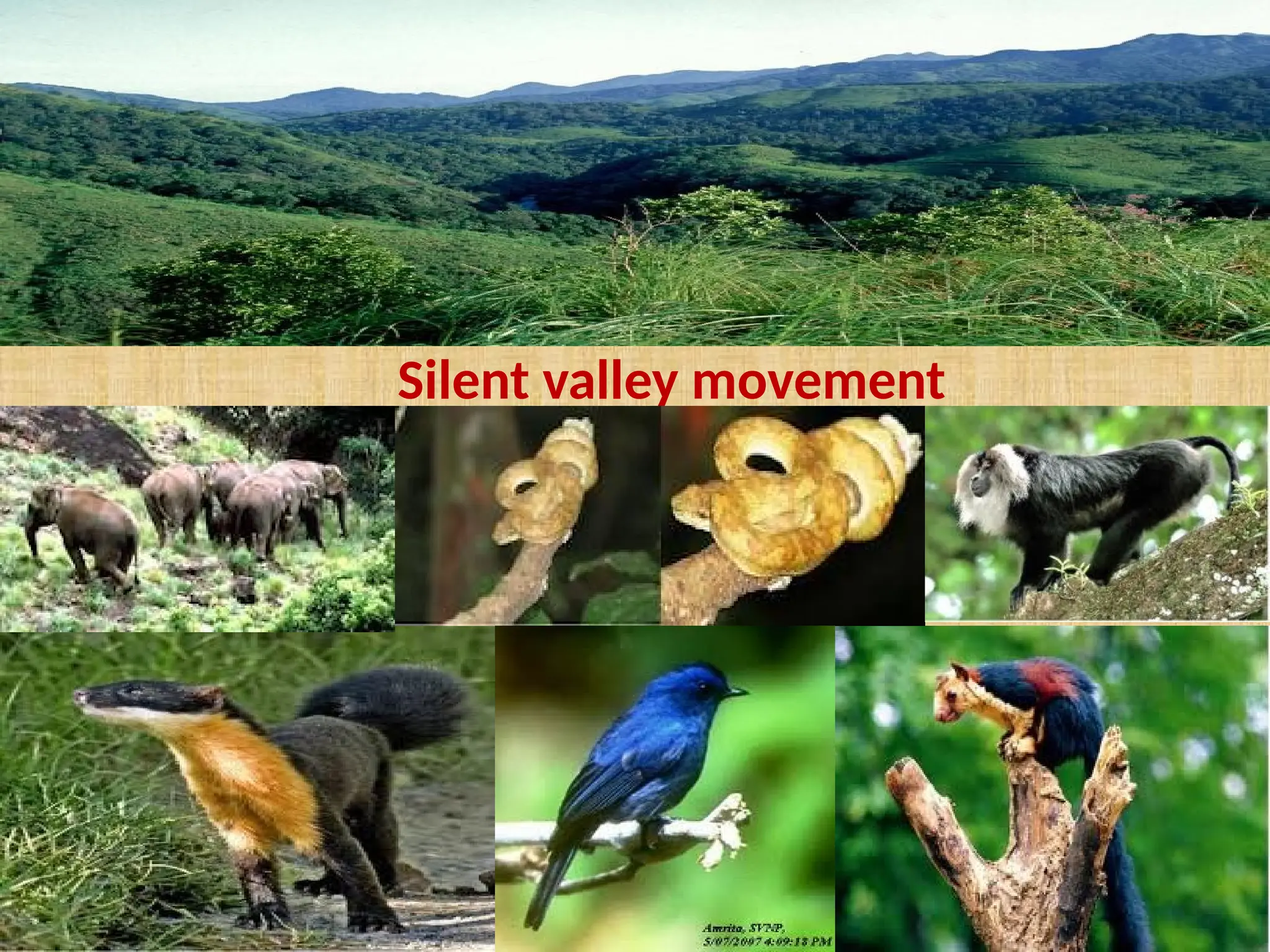
Proiectul hidroelectric din pădurea tropicală Silent Valley este respins, la fel cum a fost abandonată încercarea de a „civiliza” jungla amazoniană printr-un proiect de autostradă de mare amploare. Acest lucru declanșează cea mai importantă dezbatere din India acelui deceniu: Mediu vs. Dezvoltare, ducând la numeroase proteste și la apariția unei noi mișcări ecologice „Save Silent Valley”, nu foarte diferită de cea Chipko. La fel ca aceasta din urmă, ea nu este ghidată de o doctrină anume, ci mai curând de bunăvoința oamenilor hotărâți să salveze pădurile:
„Mișcarea împotriva construcției unui baraj din pădurile Silent Valley, lângă Palakkad, de la sfârșitul anilor ’70 și începutul anilor ’80, a fost prima de acest fel în India. Înainte de aceasta, experiența generală fusese că mișcările împotriva barajelor mari și a proiectelor hidroelectrice erau inițiate de persoanele afectate din regiune, în mod normal evacuate. Dar în cazul proiectului Silent Valley, nu a fost nevoie să se evacueze nici măcar o populație mică. Principala preocupare a oamenilor care au inițiat mișcarea a fost efectul advers pe care proiectul l-ar avea asupra mediului.
Ecologismul nu devenise la modă la acea vreme, iar publicul larg nu era preocupat de protecția mediului și de conservarea ecologică a țării, în timp ce barajele mari și proiectele hidroelectrice erau considerate inevitabile pentru dezvoltare. Guvernul din Kerala și publicul larg au susținut din toată inima proiectul, iar mișcarea începuse astfel împotriva așteptărilor mari. Faptul că a ajuns să aibă un mare succes este un omagiu adus oamenilor care au orchestrat rezistența” (The Wire, Nissam Syed).
„Liderii locali au fost cei care au lucrat timp de mulți ani la problemele de dezvoltare legate de aceste comunități, care combină acum argumente de mediu, economice și umanitare în lupta pentru a se asigura că comunitățile locale nu sunt distruse de proiecte ce vor aduce beneficii grupurilor urbane îndepărtate. Mesajul de speranță pe care anii ’70 și ’80 l-au transmis mișcării de conservare din India este acela că organizațiile locale din multe părți ale țării, fără să fi auzit măcar de Strategia Mondială pentru Conservare, afirmă principiile dezvoltării durabile și creează legături cruciale între dezvoltare și problemele de mediu” (Dilnavaz Variava, p. 159. Vezi și Wikipedia, Save Silent Valley și Silent Valley National Park).
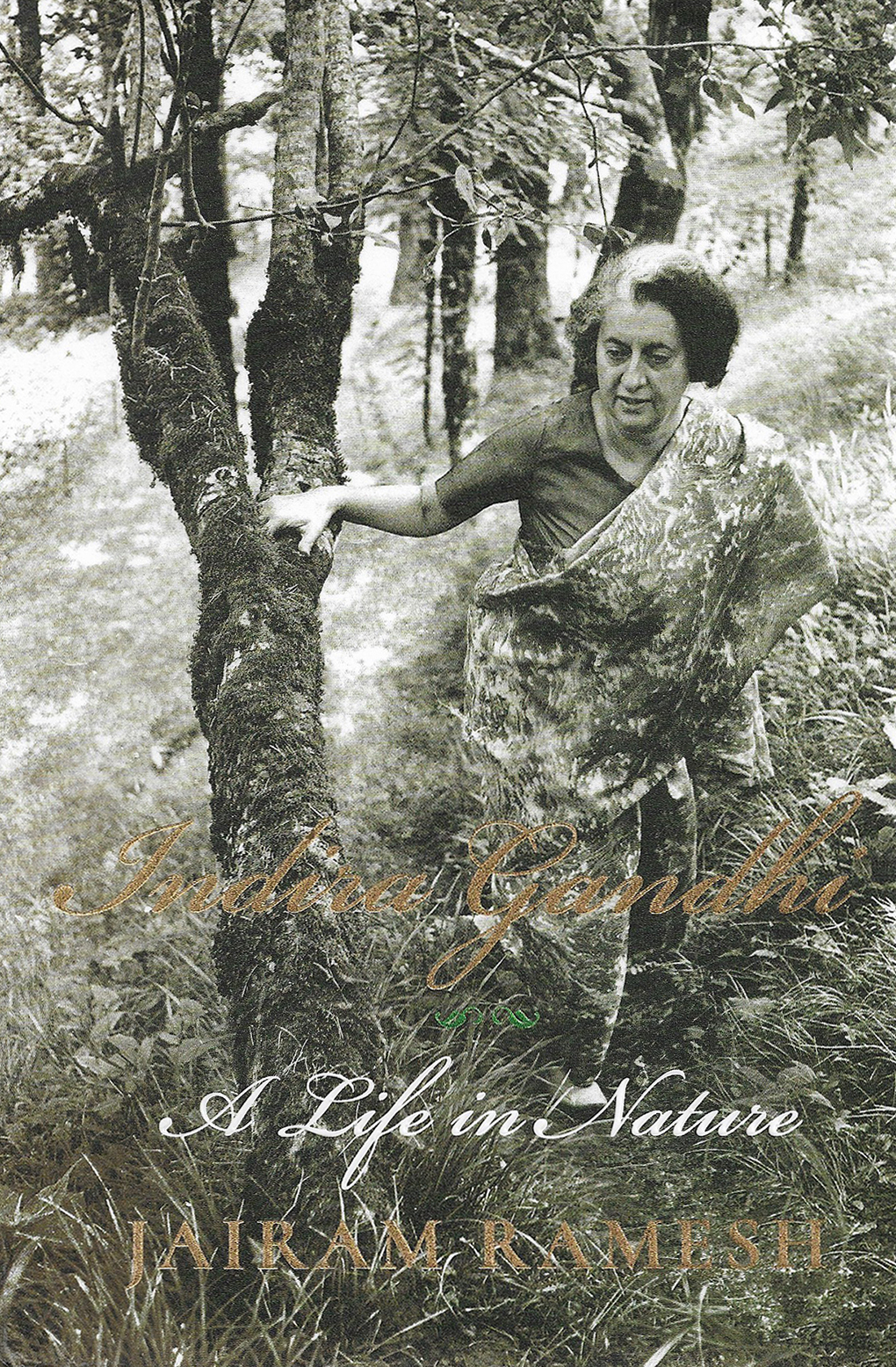
Astfel, succesul bătăliei s-a datorat în mare parte localnicilor, dar și prim-ministrului Indiei, Indira Gandhi, care a fost unul dintre cei mai mari susținători ai mișcării Save Silent Valley:
„Când Indira Gandhi a revenit ca Prim Ministru în 1980, mișcarea a simțit posibilitatea unei decizii favorabile, deoarece ea a fost primul lider mondial care a ridicat problemele de mediu pe o platformă internațională încă din 1972. Așadar, mișcarea i-a prezentat cazul prin diverse canale. Președintele Comitetului pentru Protecția Silent Valley, din Mumbai, dna. Dilnavaz Variava a acționat ca principală legătură între prim-ministru și mișcare.” „Mai presus de toate acestea, prezența unui lider precum Indira Gandhi, care era conștientă de problemele de mediu, a ajutat mișcarea să devină un mare succes, prima de acest fel din India” (The Wire: Political support, Nissam Syed. Vezi și documentarul Success Story of Silent Valley National Park | Conservation of 50 million-year-old rainforests, la https://www.youtube.com/watch?v=DwUrlV7__do).
Indira Gandhi a ridicat într-un fel această problemă și la Conferința de la Stockholm, când în discursul său public a spus cu multă diplomație că „conflictul inerent nu este între conservare și dezvoltare, ci între mediu și exploatarea nesăbuită a omului și a Pământului în numele eficienței” (vezi Arhiva ONU – documentarul „Un singur Pământ”, 1972).

2. Mediu vs. dezvoltare – cele două fețe ale aceleiași monede
Dezbaterea „Mediu versus dezvoltare” nu s-a rezumat doar la cazul Silent Valley – cea mai mare provocare a Indiei din acel deceniu. A fost și tema Conferinței de la Stockholm, reprezentând cea mai mare provocare la nivel mondial de atunci încoace. Ea a luat diverse forme, pe tonuri diferite:
„Cei bogați devin tot mai bogați, iar cei săraci nu reușesc să țină pasul”. „Nu poți separa problema bogaților și a săracilor de problema protejării mediului înconjurător” (Paul Ralph Ehrlich, autorul lucrării The Population Bomb, în documentarul *Only One Earth: 9:08-9:49, 10:36-11:15).
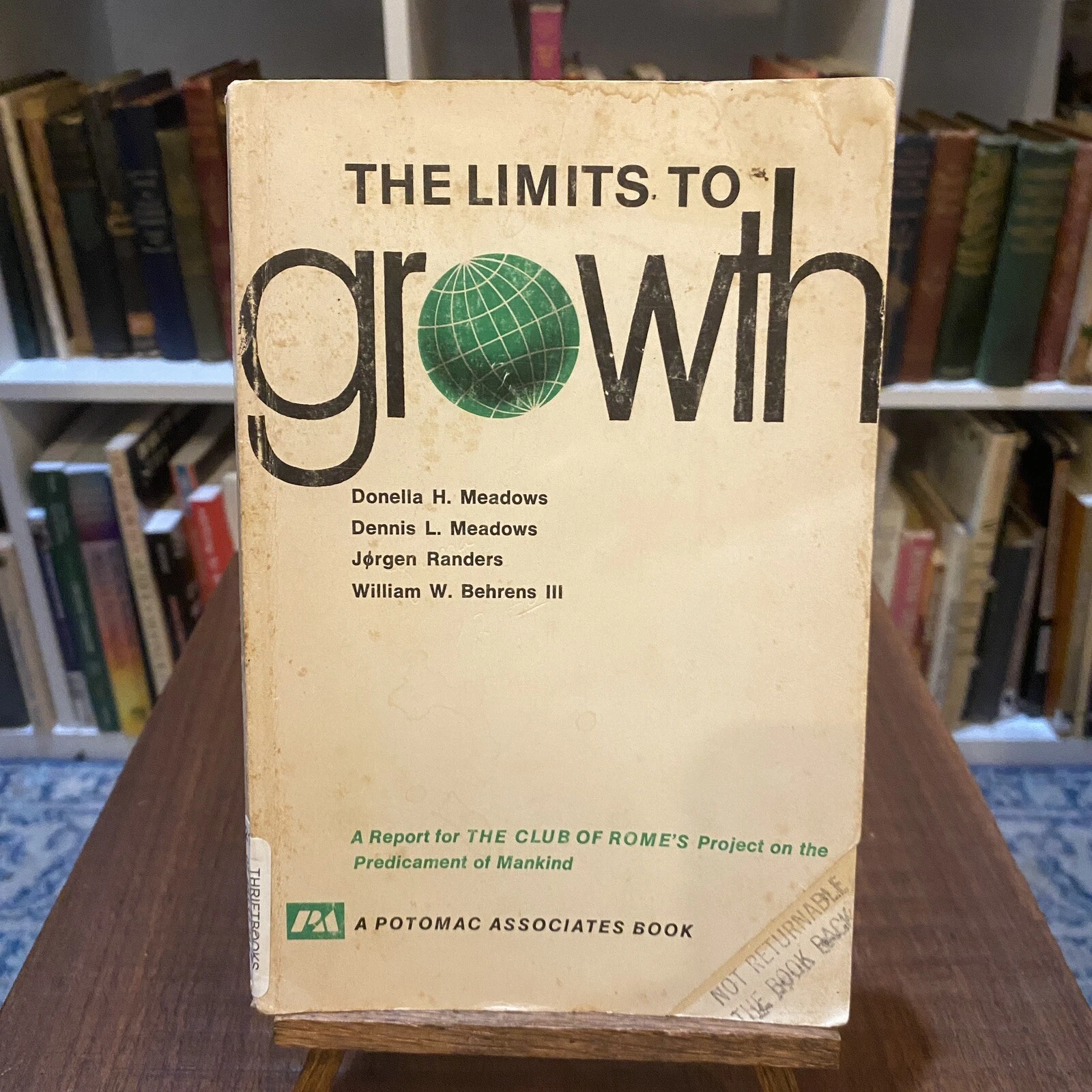
„Epuizarea resurselor naturale nu este problema în sine. Problema este creșterea într-o lume finită”. „Foametea, poluarea și penuria nu sunt, în realitate, probleme. Ele sunt simptome, simptome ale creșterii” (Dennis Meadows, în documentarul *Limitele creșterii: 19:00-19:10, 19:16-19:30).
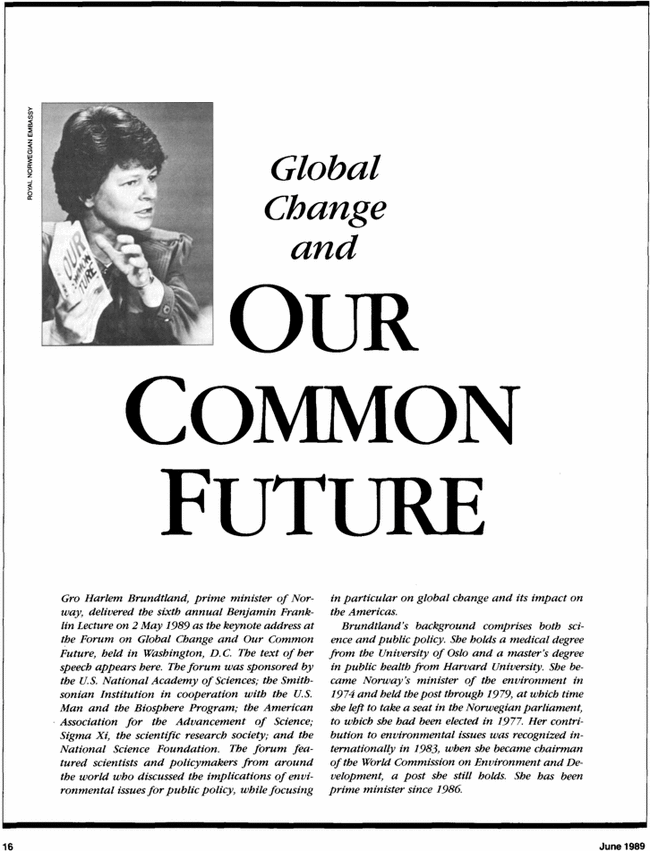
„Prăpastia dintre națiunile bogate și cele sărace se adâncește – nu se restrânge”. „Sărăcia este o cauză majoră și o consecință a problemelor globale de mediu” (Raportul Brundtland, pp. 11-12).
Prin aceste declarații și altele similare, elita a pus degradarea mediului pe seama unui eșec al „dezvoltării” sau a unui eșec „în gestionarea mediului nostru uman” – atribuind responsabilitatea, în mare parte, populațiilor din lumea a treia (Ibid.). Totodată, a creat un discurs unificator și totalizator, precum și o viziune comună asupra lumii, proclamând deschis o nouă eră a creșterii economice în care ecologia și economia vor trebui să fuzioneze (Gro Harlem Brundtland, The GLOBAL CHALLENGE, în For the Conservation of Earth: Proceedings of the 4th World Wilderness Congress, pp. 10-11). Cum va arăta această nouă eră și care este soluția propusă de elită la această problemă?
2.1. Prețul plătit pentru reformarea Africii: Holocaustul ecologic
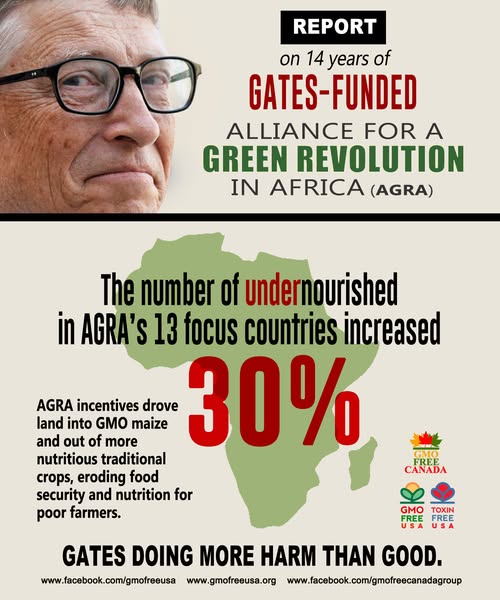
Noua eră va fi predominant tehnologică și științifică, iar aproape jumătate din populația lumii va trăi în orașe. Lumea secolului XXI va fi puternic urbanizată, așa cum se precizează în raportul „Viitorul nostru comun”. De asemenea, se preconizează că va fi o lume mai echitabilă.Pentru a transpune acest lucru în realitate, elitele au propus, ca răspuns la problematica mondială – și anume la problemele suprapopulării globale, sărăciei și degradării mediului – următoarele: 1) Revoluția Verde și/sau a Echilibrului, pentru a corecta inegalitățile dintre națiuni și oameni (Clubul de la Roma, Dennis Meadows, raportul Limitele creșterii, 1972); 2) Sistemul Mondial Total (Clubul de la Roma, raportul Modelul regionalizat și adaptiv, 1973); și, ani mai târziu, 3) proiectul Băncii Mondiale pentru Conservare (International Wilderness Leadership Foundation, Michael Sweatman, 1986).
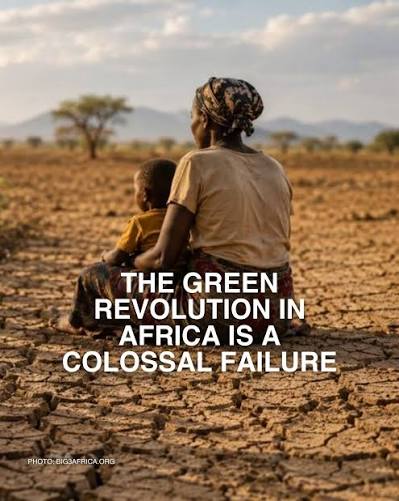
În documentarul Limitele creșterii, Dennis Meadows afirmă că „echilibrul înseamnă egalitate între națiuni”; dar oare acest lucru implică și o mai mare egalitate în interiorul națiunilor? A adus oare Revoluția Verde, în mod real, mai multă dreptate și a creat o lume mai echitabilă și mai echilibrată? În Africa și în India, urbanizarea rapidă i-a deposedat, la propriu, pe oameni de pământurile lor.
Referindu-se la acest aspect și la activitatea sa de cercetare din Africa, Bram Büscher susține că „în Sudul Global, oamenilor nu le place conservarea pentru că simt că au fost istoric deposedați sau că încă nu au acces la resurse în zonele, știți voi, de lângă locul în care locuiesc”. Apoi – continuă Büscher – astăzi, „fie că oamenilor le place sau nu, conservarea este încă adesea văzută ca acest lucru alb” (vezi Verso Books, The Conservation Revolution | Bram Büscher on saving nature beyond the Anthropocene, partea despre decolonizarea conservării: 9:56, la https://www.youtube.com/watch?v=ZKxbWkEyqAg).
Nucleul capitalist [format de obicei din albi] „urmărește un program energic a ceea ce David Harvey numea «acumulare prin deposedare», ceea ce duce la «o mișcare rapidă și amplă de capital străin care preia controlul asupra unor suprafețe uriașe de teren – în principal în Africa, Asia de Sud-Est și America Latină – fie prin cumpărare directă, fie prin contracte de arendă pe termen lung și îndepărtarea fermierilor țărani de pe pământ»” (vezi Jacob Levich, The Real Agenda of the Gates Foundation. IV. A Broader Agenda, la https://rupe-india.org/old-site/57/agenda.html).
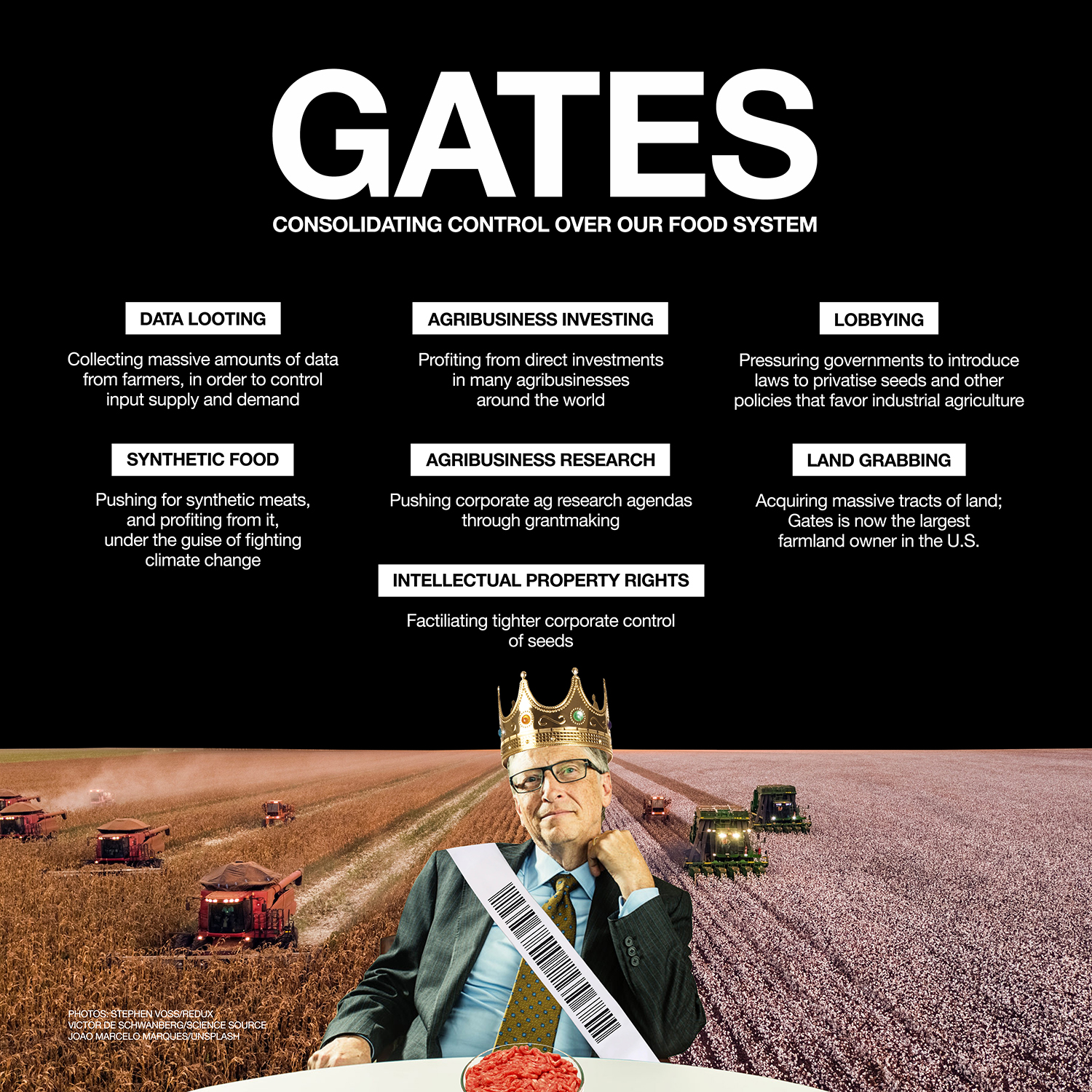
În numele reformei agrare și sub masca acțiunilor caritabile și a filantropiei la scară largă, fundații precum World Wildlife Fund (WWF), Bill & Melinda Gates Foundation (BMGF) și The Good Club au promovat agende și politici de depopulare și expropriere în țările din Lumea a Treia. Esența acestei strategii imperialiste anglo-saxone „implică o intervenție tot mai directă în țările în curs de dezvoltare/lumii a treia, mergând de la destabilizarea internă și schimbarea regimului până la ocupație militară fățișă”, remarca Jacob Levich (Ibid.).
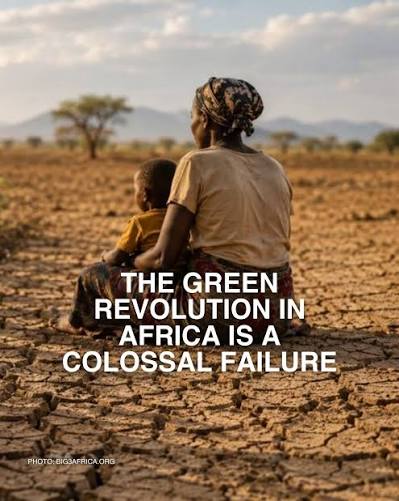
„Reforma agrară” presupune „mobilitate funciară” – un termen orwellian. În cele din urmă, acest lucru a însemnat că oamenii au fost deposedați de pământurile lor, iar agricultura tradițională a dispărut. Nu doar agricultura le-a fost distrusă, ci și viețile.
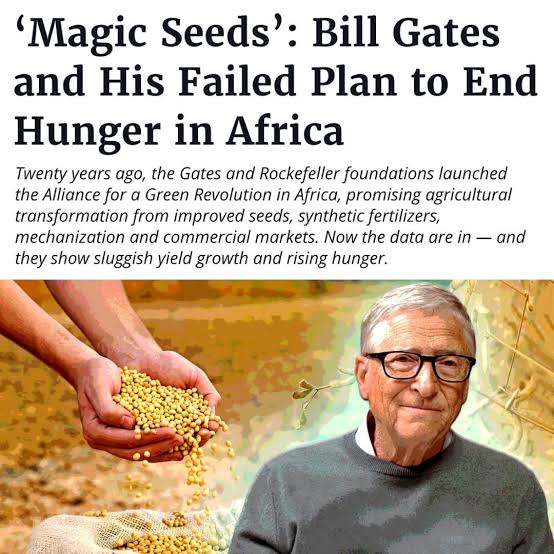
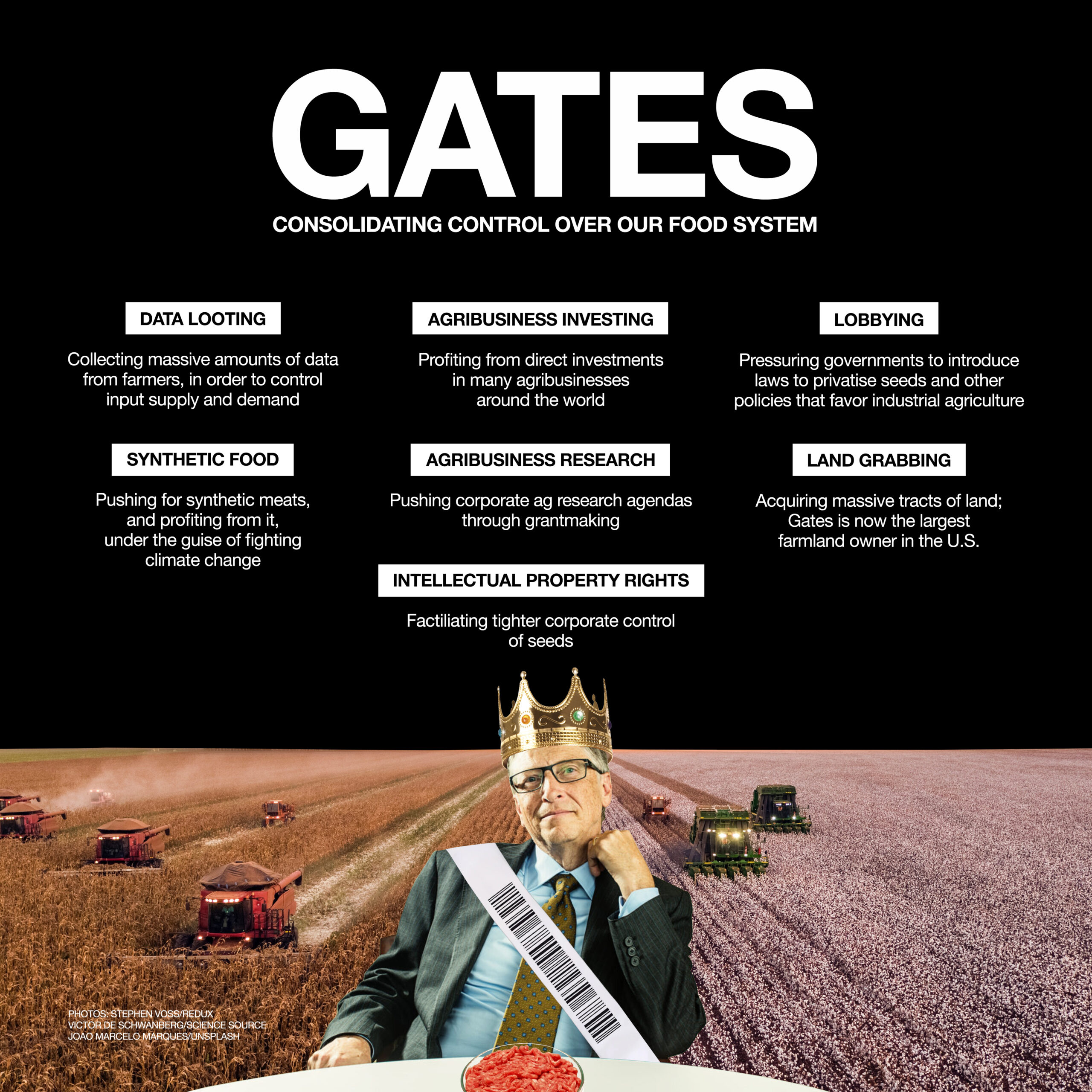
„Suntem cobai pentru producătorii de medicamente” – așa suna titlul unui ziar sud-african după campania MenAfriVac, lansată și finanțată de Fundația Gates în decembrie 2010; o campanie care, la fel ca testele pentru vaccinurile împotriva malariei și meningitei, a dus la decese și/sau la efecte adverse grave în cazul multor sugari și copii. Situația a fost similară în India, unde „șapte adolescente din comunități tribale în Gujarat și Andhra Pradesh au murit”, iar „cel puțin 1.200 de fete au suferit efecte secundare severe sau au dezvoltat afecțiuni autoimune în urma administrării vaccinurilor”. Toate acestea s-au întâmplat după ce anterior Bill Gates, într-o conferință publică din februarie 2010, „a pus încălzirea globală pe seama «suprapopulării» și a promovat stagnarea creșterii demografice drept o soluție realizabilă «dacă facem o treabă excelentă în privința noilor vaccinuri, a asistenței medicale și a serviciilor de sănătate reproductivă»”. Ei bine, se pare că dl. Gates a făcut o „treabă bună” în privința vaccinării.
„În 2010, Fundația Gates a finanțat un studiu de fază III pentru un vaccin împotriva malariei dezvoltat de GlaxoSmithKline (GSK), administrând tratamentul experimental miilor de sugari din șapte țări africane. Dorind să obțină aprobarea OMS necesară pentru autorizarea vaccinului în vederea distribuției la nivel mondial, GSK și BMGF au declarat experimentele un succes răsunător, iar presa de larg consum a preluat necritic această versiune publicitară. Puțini au analizat cu atenție textul studiului frumos printat, care dezvăluia că testele au dus la 151 de decese și au provocat „reacții adverse grave” (de exemplu, paralizie, convulsii și convulsii febrile) la 1048 dintre cei 5949 de copii cu vârste cuprinse între 5 și 17 luni. Povești similare au ieșit la iveală în urma campaniei MenAfriVac din Ciad [2012], finanțată de Gates, unde relatări neconfirmate susțineau că 50 din cei 500 de copii vaccinați forțat împotriva meningitei au suferit ulterior paralizii. Semnalând și alte abuzuri, un ziar din Africa de Sud declara: „Suntem cobai pentru producătorii de medicamente”.
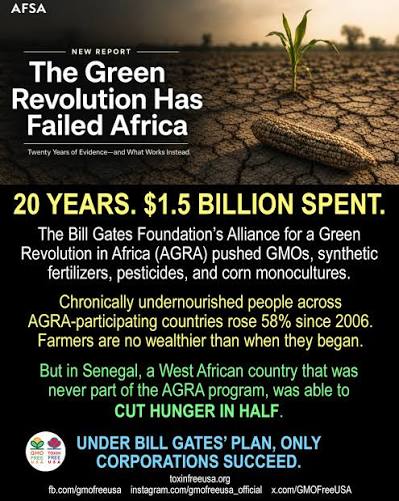
Totuși, în India au ieșit pentru prima dată la iveală, în atenția publicului larg, implicațiile colaborării dintre BMGF și marile companii farmaceutice („Big Pharma”). În 2010, șapte adolescente aparținând unor comunități tribale din Gujarat și Andhra Pradesh au decedat după ce au primit injecții cu vaccinuri împotriva HPV (virusului papiloma uman), în cadrul unui „studiu demonstrativ” de amploare, finanțat de Fundația Gates și gestionat de organizația PATH. Vaccinurile, dezvoltate de companiile GSK și Merck, au fost administrate unui număr de aproximativ 23.000 de fete cu vârste cuprinse între 10 și 14 ani, sub pretextul protejării acestora împotriva cancerului de col uterin pe care l-ar fi putut dezvolta la o vârstă înaintată. Extrapolând datele rezultate în urma studiului, medicii indieni au estimat ulterior că cel puțin 1.200 de fete au suferit efecte adverse grave sau au dezvoltat afecțiuni autoimune ca urmare a acestor injecții.
(…) O comisie parlamentară indiană a stabilit că o campanie de vaccinare finanțată de Gates a fost, de fapt, un studiu clinic de amploare, desfășurat în numele unor companii farmaceutice și mascat sub forma unui „studiu observațional”, cu scopul de a eluda cerințele legale. Comisia a constatat că organizația PATH a „încălcat toate legile și reglementările guvernamentale stabilite pentru studiile clinice”, ceea ce constituie o „încălcare flagrantă a drepturilor omului și un caz de abuz asupra copiilor”” (Ibid. Vezi III. Gates and Big Pharma: „Guinea pigs for the drugmakers”; apud. Concluziile raportului Comisiei permanente pentru sănătate și familie a Parlamentului indian).
Deși această încălcare flagrantă a drepturilor omului a fost adusă în atenția comisiei parlamentare indiene și, ulterior, a Curții Supreme în 2012, acest lucru nu a împiedicat Fundația Gates să continue campania MenAfriVac în micul sat Gouro din nordul Ciadului, provocând noi victime în rândul copiilor și demonstrând că, atunci când sunt în joc interese financiare majore, inițiativele de afaceri nu sunt niciodată abandonate cu adevărat.
La Voix a fost primul și singurul ziar care a relatat despre acest lucru la acea vreme, într-o rubrică scurtă și puternic cenzurată, la care face referire jurnalista britanică Christina England:
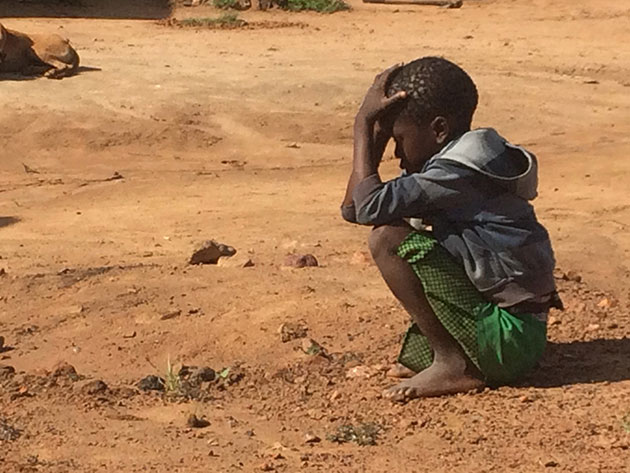
„Pe 20 decembrie 2012, o tragedie legată de vaccinare a lovit micul sat Gouro, situat în nordul Ciadului, Africa. Potrivit ziarului La Voix, din 500 de copii care au primit noul vaccin împotriva meningitei, MenAfriVac, cel puțin 40 dintre ei, cu vârste cuprinse între 7 și 18 ani, au devenit paralizați. Acești copii au suferit, de asemenea, halucinații și convulsii” (Christina England, 40 Children Paralyzed in Chad, Africa after Receiving Newest Meningitis Vaccine, la https://educate-yourself.org/vcd/meningitisvaccinedangers06jan13.shtml).
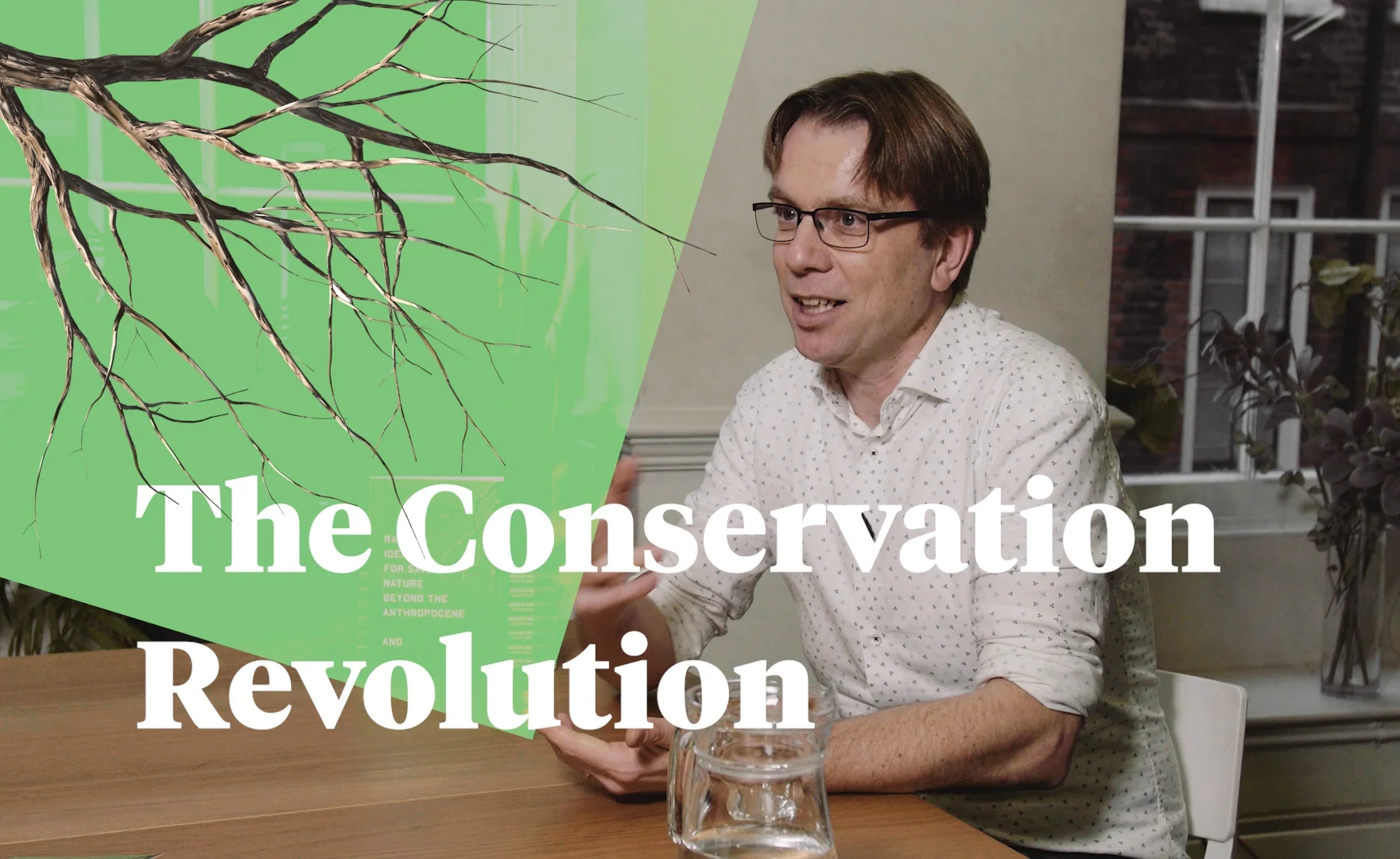
Iată de ce „conservarea trebuie decolonizată”. Decolonizarea conservării, în cuvintele lui Bram Büscher, înseamnă „a lua în serios diferite forme de conservare, a le extinde și diversifica enorm, astfel încât să nu fie doar o activitate a albilor, ci una desfășurată de un grup divers de oameni, în moduri diverse”; pentru ca, mai apoi, „împreună, să sperăm că putem construi acea narațiune mai amplă a unei conservări conviviale”.
Aceasta a fost și speranța primului-ministru al Indiei, Indira Gandhi, și adevăratul motiv pentru care a pledat în cadrul Conferinței de la Stockholm. Altfel, am cădea în capcana construirii acelei societăți [totalitare] de coșmar – cu legi și reguli rigide – despre care economistul Ronald Kutscher ne-a avertizat cu mulți ani în urmă.
Ana-Maria Caminski
Corespondent in Romania, pentru NASUL TV Canada
Quo Vadis, or where are we going with sustainable development? (I. Fifth part)
‘The Regionalized and Adaptive Model of the Global World System’ report (1973) of the Club of Rome, with its vision to unify the world under a world government (world system or global village) and to divide it into ten regions or kingdoms, found its echo in the World Conservation Bank project (1986)[1]. Environmental conservation policy, alongside its trans-frontier conservation areas (TFCAs), also called peace parks, was the „green pass” of this vision, born mostly from the fear of The Population Bomb (Paul R. Ehrlich) and of an apocalyptic ending.
Prophets of the Doomsday, academics, and many of the world’s leading scientists have already warned us, soon after the Stockholm conference, that Doomsday is near (see BBC, 1972: Intro Maurice Strong Interview)[2]. But if there is talk of an environmental Apocalypse and a kingdom with ten regions, who would be the king? Which part of the world would be saved and which not? And, finally, how real is this Apocalypse?
1. The conservation movement in India
Signs of a conservation movement could also be found in India, being related to British rule and the breakdown of traditional standards: “Respect for nature—and the active protection of the environment—has ancient roots in India. The royal edicts of the emperor Ashoka, dating back to the third century B.C., provide lists of wild species to be strictly preserved and injunctions on the protection of forests.
(…) In the past century, there has been a systematic breakdown of traditional norms of environmental protection. This has been partly due to the increasing pressures of an exploding population and the breaking down of religious and social taboos. The real root of today’s problems, however, goes back to British rule when forests were taken away from the village communities, who used and protected them, to be systematically exploited for commercial purposes to meet imperial needs. Unfortunately, the post-independence government in India continued to treat forests primarily as a source of state income. Village communities stood by helplessly as the resources of their well-being slipped away” (see Dilnavaz Variava, INDIA—THE CONSERVATION MOVEMENT, in the For the Conservation of Earth: Proceedings of the 4th World Wilderness Congress, p. 150).
Unlike other Western conservation movements, the one in India had no ideological implications, being neither linked to any elite network nor to right or left factional parties, as it was in Africa. Initially, it arose more from the real need of village communities to defend their forests from the reckless exploitation of the British in the name of efficiency. A struggle for liberation from British rule that Hindus had been fighting for centuries, dating back to when William Wilberforce criticized the East India Company in the British Parliament for abolishing slavery. This makes India a peculiar case regarding conservation (Wikipedia, William Wilberforce. Also see the Amazing Grace film, 2006).
The only institution with which the movement was connected from the outset is the Bombay Natural History Society (BNHS)[3], and rightly so, because its roots lie in history, in the fundamental need for the liberation of Hindus, which is embedded in their collective mentality.
This made Chandi Prasad Bhatt a liberator whose actions, years later, helped spark the Chipko conservation movement. In the Garhwal area, village after village, women were pleading for Bhatt „to visit them and help them reforest their lands”. They embraced the trees as a form of protest against commercial logging and the government’s policies on deforestation. It seemed a little bit feminist. But despite its ecofeminist label, due to the involvement mostly of women, or to its eco-socialist reputation, due to Bhatt, the Chipko Andolan movement[4] did not have any eco-fascist doctrine behind (see Wikipedia, Chipko movement and Chandi Prasad Bhatt).
However, if we were to trace a linkage, it would be with the first safari expeditions of the British royal family in the ’60s[5] and with the establishment of the World Wildlife Fund branch on Nov 27, 1969, in New Delhi, thus melding the Chipko movement into the green global trend.
1.1. ‘Save Silent Valley’ movement
The Chipko movement showed that the environment was more important than urban development. This tension increased considerably with the ’74 proposal for a high-tech hydroelectric project in the Silent Valley in the state of Kerala. The controversy was this: How could the project be implemented without damaging the Silent Valley’s evergreen rainforests?
A study conducted by the Kerala Forest Research Institute (KFRI) in ’77 concludes that the construction of a hydroelectric dam on the Kunthi River would cause damage, leading to the rejection of the project: “In 1974, the construction of the Idukki hydroelectric project was nearing completion, and the state government was looking for new hydroelectric projects to meet the state’s power requirements. The Kerala State Electricity Board (KSEB) submitted a proposal to the Kerala government for the construction of a hydroelectric project at Silent Valley in Palakkad district. In 1977, the government accepted the proposal and decided to go ahead with the project. In the same year, the Kerala Forest Research Institute (KFRI) in Peechi, near Thrissur, conducted a study on the possible impact of the project on the forests in the area. The study concluded that the project would completely destroy the evergreen rainforests in Silent Valley” (The Wire, Nissam Syed).
“As so often happens, environmentalists woke up to the existence of this area—and to the devastating effects of the proposed hydroelectric project—at a stage when the project had already been cleared by the Planning Commission for implementation. In fact, preliminary work on the project had already started in 1973, but in 1976 to 1977, a government-sponsored task force for the Protection of the Western Ghats, headed by Mr. Zafar Futehally, recommended that the project be dropped” (Dilnavaz Variava, p. 153).
The hydroelectric project in the Silent Valley rainforest is rejected, much like the attempt to „civilize” the Amazon jungle through a large-scale highway project is abandoned. This sparks the most significant debate of that decade in India: Environment vs. Development[6], leading to numerous protests and the emergence of a new ecological movement Save Silent Valley, not very different from the Chipko. Like that one, it is not driven by any underlying doctrine, but rather by the goodwill of people determined to save the forests:
“The movement against the construction of a dam in the Silent Valley Forests near Palakkad in the late 1970s and the early ’80s was the first of its kind in India. Before that, the general experience had been that movements against big dams and hydroelectric projects were initiated by the affected people of the region, normally the evacuees. But in the case of the Silent Valley Project, there was no need to evacuate even a small population. The prime concern of the people who initiated the movement was the adverse effect the project would have on the environment.
Environmentalism hadn’t become fashionable at the time, and the general public was not worried about environmental protection and the preservation of the country’s ecology, whereas big dams and hydroelectric projects were considered inevitable for development. The government of Kerala and the general public had wholeheartedly supported the project, and the movement thus started against great odds. That it went on to become a great success is a tribute to the people who masterminded the resistance” (The Wire, Nissam Syed).
“It is local leaders who have worked for many years on the development issues connected with these communities who are now combining environmental, economic, and humanitarian arguments in the struggle to ensure that local communities are not destroyed by projects that will benefit distant urban groups. The message of hope that the 1970s and 1980s have provided to the conservation movement in India is that grassroots organizations in many parts of the country, without even having heard of the World Conservation Strategy, are affirming the tenets of sustainable development and forging crucial links between development and environmental issues” (Dilnavaz Variava, p. 159. Also see Wikipedia, Save Silent Valley and Silent Valley National Park).
Thus, the success of the battle was due mostly to the locals, but also to India’s Prime Minister, Indira Gandhi[7], who was one of the greatest supporters of the Save Silent Valley movement: “When Indira Gandhi returned as prime minister in 1980, the movement smelled the possibility of a favorable decision, as she was the first world leader to raise environmental issues on an international platform way back in 1972. So the movement presented the case before her through various channels. The chairperson of the Silent Valley Protection Committee in Mumbai, Dilnavaz Variava, acted as the main link between the prime minister and the movement.” “Above all these, the presence of a leader like Indira Gandhi, who was aware of environmental issues, helped the movement to become a great success, the first of its kind in India” (The Wire: Political support, Nissam Syed. Also see the Success Story of Silent Valley National Park | Conservation of 50 million-year-old rainforests documentary, at https://www.youtube.com/watch?v=DwUrlV7__do).
Indira Gandhi raised this matter in a way also at the Stockholm Conference, when in her public speech she said with much diplomacy that “the inherent conflict is not between conservation and development but between the environment and the reckless exploitation of man and Earth in the name of efficiency” (see the UN Archive – Only One Earth documentary, 1972)[8].
2. Environment vs. development – the two faces of the same coin
‘Environment vs. Development’ debate was not just the Silent Valley debate – India’s biggest challenge in a decade. It was also the Stockholm Conference debate, the world’s biggest challenge since then. This has taken various forms of expression, in different tones:
“The rich keep getting richer, and the poor do not catch up”. “You cannot separate the question of the rich and the poor from the question of preserving the world’s environment” (Paul Ralph Ehrlich, author of the Population Bomb, in thedocumentary *Only One Earth: 9:08-9:49, 10:36-11:15).
“Natural resource depletion is not the problem itself. The problem is growth in a finite world”. “Famine, pollution, and scarcity are not really problems. They are symptoms, symptoms of growth” (Dennis Meadows, The Limits to Growth documentary: 19:00-19:10, 19:16-19:30).
“The gap between rich and poor nations is widening – not shrinking”. “Poverty is a major cause and effect of global environmental problems” (Brundtland Report, pp. 11-12).
By these statements and others alike, the elite has attributed the degradation of the environment to a failure of ‘development’ or a failure ‘in managing our human environment’, mostly to third-world populations (Ibid.). Simultaneously, created a unifying, totalizing discourse and a common vision of the world, openly declaring a new era of economic growth in which ecology and economy will have to merge[9] (see Gro Harlem Brundtland, The GLOBAL CHALLENGE, in the For the Conservation of Earth: Proceedings of the 4th World Wilderness Congress, pp. 10-11). What will this new era look like, and what is the proposed solution by the elite to this issue?
2.1. The price paid for reforming Africa: environmental Holocaust
The new era will be predominantly technological and scientific, with nearly half of humanity living in cities. The 21st century’s world will be heavily urbanized, as stated in the ‘Our Common Future’ report. It is also expected to be a more equitable world[10].
To make it real, the elite have proposed as an answer to the world’s problematique – namely, to the global overpopulation issue, poverty, and environmental degradation: 1) the Green and/or Equilibrium Revolution to adjust the inequalities among nations and people (Club of Rome, Dennis Meadows, The Limits to Growth Report, 1972); 2) the Total World System (Club of Rome, Regionalized and Adaptive Model Report, 1973); and, years later, 3) the Conservation World Bank project (International Wilderness Leadership Foundation, Michael Sweatman, 1986).
In the Limits to Growth documentary, Dennis Meadows said that ‘Equilibrium means equality between nations’, but does it mean more equality within Nations?[11] Has the Green Revolution really brought more justice and created a more equitable, balanced world? In Africa and India, the rapid urbanization has literally kicked people off their land.
Referring to this aspect and his activity research from Africa, Bram Büscher argued that “in the Global South, people don’t like conservation because they feel they’ve been historically dispossessed, or they still don’t have access to resources in areas, you know, next to where they live”. Then – it continues Büscher – today, “whether people like it or not, conservation is still often seen as this white thing” (see Verso Books, The Conservation Revolution | Bram Büscher on saving nature beyond the Anthropocene, part decolonizing conservation: 9:56,at https://www.youtube.com/watch?v=ZKxbWkEyqAg).
The capitalist core [usually formed by whites] “is pursuing an energetic program of what David Harvey has called „accumulation by dispossession”, leading to „a rapid and large movement of foreign capital taking control over huge tracts of land – mainly in Africa, Southeast Asia, and Latin America – by either outright purchase or by long-term leases and removal of peasant farmers from the land” ” (see Jacob Levich, The Real Agenda of the Gates Foundation. IV. A Broader Agenda, at https://rupe-india.org/old-site/57/agenda.html).
In the name of land reform and under the guise of charity and Big Philanthropy, foundations such as the World Wildlife Fund (WWF), the Bill & Melinda Gates Foundation (BMGF), and The Good Club have promoted agendas and policies of depopulation and expropriation in Third World countries. The central thrust of this Anglo-Saxon imperialist strategy “involves increasingly direct intervention in the developing countries/Third World, ranging from internal destabilization to regime change to outright military occupation”, remarked Jacob Levich (Ibid.).
‘Land reform’ involves ‘land mobility’[12] – it’s an Orwellian term. Ultimately, it meant that people were removed from their land, and their traditional agriculture vanished. Not only was their agriculture destroyed, but so were their lives.
‘We are guinea pigs for the drugmakers’, ran a South African newspaper headline after the Gates- launched and funded MenAfriVac campaign in Dec. 2010; that, following the malaria and meningitis vaccine trials, has caused death and/or serious adverse effects in so many infants/children. The same went in India, where “seven adolescent tribal girls in Gujarat and Andhra Pradesh died”, and “at least 1,200 girls experienced severe side effects or developed autoimmune disorders as a result of the injections”. All of this happened after Bill Gates previously, in a Feb. 2010 public lecture, “attributed global warming to „overpopulation” and touted zero population growth as a solution achievable „[i]f we do a really great job on new vaccines, health care, and reproductive health services””[13]. Well, it seems that Mr. Gates has done a „good job” regarding vaccination.
“In 2010, the Gates Foundation funded a Phase III trial of a malaria vaccine developed by GlaxoSmithKline (GSK), administering the experimental treatment to thousands of infants across seven African countries. Eager to secure the WHO approval necessary to license the vaccine for global distribution, GSK and BMGF declared the trials a smashing success, and the popular press uncritically reproduced the publicity. Few bothered to look closely at the study’s fine print, which revealed that the trials resulted in 151 deaths and caused „serious adverse effects” (e.g., paralysis, seizures, and febrile convulsions) in 1048 of 5949 children aged 5-17 months. Similar stories emerged in the wake of the Gates-funded MenAfriVac campaign in Chad [2012], where unconfirmed reports alleged that 50 of 500 children forcibly vaccinated for meningitis later developed paralysis. Citing additional abuses, a South African newspaper declared: „We are guinea pigs for the drugmakers”.
It was in India, however, that the implications of BMGF’s collaboration with Big Pharma first rose to widespread public attention. In 2010, seven adolescent tribal girls in Gujarat and Andhra Pradesh died after receiving injections of HPV (Human Papilloma Virus) vaccines as part of a large-scale „demonstrational study” funded by the Gates Foundation and administered by PATH. The vaccines, developed by GSK and Merck, were given to approximately 23,000 girls between 10 and 14 years of age, ostensibly to guard against cervical cancers they might develop in old age. Extrapolating from trial data, Indian physicians later estimated that at least 1,200 girls experienced severe side effects or developed auto-immune disorders as a result of the injections.
(…) An Indian Parliamentary Committee determined that the Gates-funded vaccine campaign was, in fact, a large-scale clinical trial conducted on behalf of the pharmaceutical firms and disguised as an „observational study” to outflank statutory requirements. The Committee found that PATH had „violated all laws and regulations laid down for clinical trials by the government” in a „clear-cut violation of human rights and a case of child abuse”” (Ibid. See III. Gates and Big Pharma: “Guinea pigs for the drugmakers”; apud. Indian Parliament’s Standing Committee on Health and Family Report’s findings)[14].
Although this flagrant human rights violation was brought to the attention of the Indian parliamentary committee and, subsequently, to the Supreme Court[15] in 2012, this did not prevent the Gates Foundation from continuing the MenAfriVac campaign in the small village of Gouro in northern Chad, causing more child victims and demonstrating that where major financial interests are at stake, business initiatives are never truly abandoned[16].
La Voix was the first and only newspaper to report on this at that time, in a short, heavily censored column, which the British journalist Christina England refers to:
“On December 20, 2012, a vaccination tragedy hit the small village of Gouro, located in northern Chad, Africa. According to the newspaper La Voix, out of five hundred children who received the new meningitis vaccine MenAfriVac, at least 40 of them, between the ages of 7 and 18, have become paralyzed. Those children also suffered hallucinations and convulsions” (see Christina England, 40 Children Paralyzed in Chad, Africa after Receiving Newest Meningitis Vaccine, at https://educate-yourself.org/vcd/meningitisvaccinedangers06jan13.shtml)[17].
This is why ‘conservation must be decolonized’. Decolonizing conservation, in the words of Bram Büscher, means “to take different forms of conservation seriously, broaden and diversify it tremendously, so it’s not just something white people do, but something a diverse group of people does in diverse ways”; and then, “together, hopefully we can build that bigger convivial conservation story”[18].
It was also the hope of India’s Prime Minister, Indira Gandhi, and the true reason why she pleaded at the Stockholm Conference. Otherwise, we would fall into the trap of building that nightmarish [totalitarian] society—with rigid laws and rules—that economist Ronald Kutscher[19] warned us about many years ago.
Endnotes
[1] Both the report and the project mention a survival strategy as a practical solution to the problematique, or the world’s environmental problems. To implement it, the Club of Rome called for a regionalized, adaptive model of the Total World System, divided into ten regions. While the International Wilderness Leadership Foundation has proposed, through Michael Sweatman, the creation of the Conservation World Bank and its sister organization, a World Conservation Service:
“In 1944, the Bretton Woods Conference was convened to address the international monetary crisis that had been escalating in the early 40’s. That conference produced macro solutions in the form of the World Bank and the International Monetary Fund. (…) The creation of the World Conservation Bank and the World Conservation Service would produce an environmental bridgehead consisting of resources from the public and private sectors, thus creating the framework for a new initiative.”, and
“The World Conservation Strategy (WCS) was developed by the International Union for Conservation of Nature and Natural Resources (IUCN) to develop a strategy for global conservation.”, respectively
“The World Conservation Strategy emphasizes that conservation and development are two sides of the same coin, conservation being defined in terms of – „managing the use of the environment and natural resources to ensure the maximum sustainable benefits for present and succeeding generations”” (see Michael Sweatman, the World Bank for Conservation project: 4.2. National Conservation Strategies (NCSs), pp. 3-4, 13, at https://idl-bnc-idrc.dspacedirect.org/items/9fc0685e-aec7-487a-9971-7c471dbbe0fe. Also see the Regionalized and Adaptive Model of the Global World System: 1.Motivation and Objectives, and 2. Basic Structure of the Model, at https://www.bibliotecapleyades.net/sociopolitica/esp_sociopol_clubrome10.htm).
[2] In a BBC Interview, Maurice Strong stated that “with all the evidence that we’ve amassed in our preparations for the Stockholm conference, including the views of many of the world’s leading scientists, I am convinced that the prophets of Doom have got to be taken seriously. In other words, Doomsday is a possibility. I’m equally convinced that Doomsday is not inevitable” (see BBC, 1972: Intro Maurice Strong Interview, at https://www.youtube.com/watch?v=1YCatox0Lxo).
[3] With reference to this, see the paragraph:
“An environmental, or rather wildlife, conservation movement of the type known in the Western world was first launched in India by the Bombay Natural History Society at its Golden Jubilee in 1933. This organization, founded in 1883 by sportsmen and naturalists, contributed a great deal to the initial documentation of India’s flora and fauna. In later years, it played a quiet but useful role in protecting endangered species of wildlife, lobbying for the creation of sanctuaries, and in framing wildlife protection legislation. The World Wildlife Fund, launched in 1970 [Nota bene: WWF-India, referred to here, was established on Nov 27, 1969], played an important role in publicizing wildlife conservation, primarily among the educated elite.
Both these organizations could occasionally obtain governmental action largely because of the personal interest and commitment to conservation of two of India’s prime ministers who held office for 34 out of the 40 years of India’s independence—Pandit Jawaharlal Nehru and Indira Gandhi” (see Dilnavaz Variava, INDIA—THE CONSERVATION MOVEMENT, in the For the Conservation of Earth: Proceedings of the 4th World Wilderness Congress, p. 151).
[4] Regarding this, see also the next paragraphs:
“From the mid-1970s, a truly exciting trend has emerged with the explicit and successful linkage of environmental, social, and economic perspectives. This has sprung from groups engaged in local development and economic issues which have perceived and integrated environmental imperatives in their campaigns. A landmark was the Chipko Andolan—the now-famous Hug-the-Trees movement—born in the foothills of the Himalayas in 1973.”, respectively
“In village after village in the Garhwal area, women were pleading for Chandi Prasad Bhatt to visit them and help them reforest their lands. Bhatt is the father of the Chipko movement who, with young volunteers, has been spreading awareness of forest conservation and organizing eco-development and reforestation camps” (Ibid.).
[5] In late January 1961, the British royal family, Queen Elizabeth II and Prince Philip, went on a safari in India, during which a tiger hunt was organized. Ironically, Prince Philip shot a tiger during the hunt just four months before he helped found the World Wildlife Fund (WWF). It is known that for Hindus, the tiger is a symbol of royal sovereignty, courage, and royal power. Could the shot tiger have meant the kneeling of Hindu sovereignty before the British Crown? Maybe yes, considering that a year before, during another Royal tour in Africa, Sir Julian Huxley openly boasted that the British oligarchy would use the conservation movement as the principal weapon to impose a Malthusian world order all over the world (see EIR, Jeffrey Steinberg, Tinny Blair Blares for Prince Philip’s Global Eco-Fascism, 1997).
[6] As The Wire noted, building big dams has long been linked to development. Precisely with this promise of developing Kerala’s poorest regions, the Athirappilly Hydroelectric Project was presented to the Indian government in 1977.
Three strong arguments were in its favor, related to energy, irrigated land, and employment:
“The hydroelectric project, situated in one of Kerala’s poorest regions, was an economic necessity for Kerala. It would generate 500 million units of energy, irrigate 10,000 hectares of land, and provide employment for 3,000 people during its construction phase” (Dilnavaz Variava, p. 154).
1. “It would help meet the growing power demand in the state and solve the acute power shortage in the Malabar region”. 2. “The project would bring about development in the two most backward districts of Kerala – Palakkad and Malappuram”. 3. “Around 10,000 hectares of land could be irrigated via canals in the Mannarkadu region” (The Wire: Political repercussions of the movement).
The project, initially accepted, was later rejected – during Indira Gandhi’s second mandate as Prime Minister of India in 1980 – by a committee convened to assess the environmental implications. This triggered the greatest debate in India at that time between environment and development, leading to the ‘Save Silent Valley’ movement:
“If the Chipko movement is a pointer to the new and most welcome direction of integrating environmental and economic issues through grass-roots movement by affected communities, the Silent Valley campaign provides a landmark of a new awareness among intellectuals of the dangers of blind allegiance to models of development based on large, high-technology projects”. “The destruction of valuable ecosystems and the displacement of thousands of people, many of whom live in tribes whose culture, religion, and very survival are closely interwoven with the forests, have formed the focus of these debates” (Dilnavaz Variava, pp. 152, 159).
[7] In this direction, see the paragraphs:
“India’s foremost naturalist, Dr. Salim Ali, played a major role in convincing Indira Gandhi, who again became prime minister in 1980, to ask the state government to halt further work until the central and state governments could explore the implications of the proposed hydroelectric projects and the alternatives that were available. A committee with representatives of the state and central governments was set up by her, under the chairmanship of Professor M.G.K. Menon (then Secretary of the Department of Science and Technology), to look into the ecological implications of the project.
In November 1983, the Silent Valley hydroelectric project was officially declared to have been shelved. Steps have been initiated since then to create the Silent Valley National Park. (…) A campaign involving three successive Prime Ministers (Morarji Desai, Charan Singh, and Indira Gandhi) led to the most heated public conservation debate among intellectuals throughout the country” (Dilnavaz Variava, p. 156).
“Gandhi appointed a committee headed by noted scientist M.G.K. Menon to study the feasibility of the project and the environmental backlash it would cause. Half the battle was already won, as Menon was a known sympathizer of the movement. Still, the Menon Committee conducted extensive studies and submitted its report, stating that it would be advisable to refuse the Kerala government permission to construct a hydroelectric project at Silent Valley, as it would have serious environmental consequences. But the report said it was up to the political leadership to take a final decision on the matter.
Gandhi accepted the recommendations of the committee and rejected the Kerala government’s applications for permission to construct the project. The Union government suggested that the Silent Valley forest area should be declared a national park. The state government called off the project in November 1983. Rajiv Gandhi, the then prime minister, declared the Silent Valley a national park two years later” (The Wire: Political support). Years later, the project will be restarted after being rejected (see https://www.sanctuarynaturefoundation.org/article/sounds-of-silence–silent-valley-yesterday%2C-today-and-tomorrow).
[8] See Indira Gandhi’s whole statement: “Countries with but a small fraction of the world population consume the bulk of the world’s production of minerals, fossil fuels, and so on. Thus, we see that when it comes to the depletion of natural resources and environmental pollution, the increase of one inhabitant in an affluent country at his level of living is equivalent to an increase of many Asians, Africans, or Latin Americans at their current material levels of living. The inherent conflict is not between conservation and development but between the environment and the reckless exploitation of man and Earth in the name of efficiency” (Indira Gandhi, UN Archive – Only One Earth documentary: 13:23-14:04, at https://media.un.org/avlibrary/en/asset/d240/d2408654).
[9] Referring to the Brundtland Report, Mrs. Gro Harlem has said at the 4th World Wilderness Congress that:
“The report’s analysis is clear. The environment is not a separate sector distinct from key economic sectors such as industry, agriculture, and energy. It is not a question of environment or development. It is both or neither. Ecology and economy will have to merge. Environmental concerns must become an integral part of decision-making at all levels. These goals will require changes also in the policies of the international organizations responsible for trade, aid, technological, and financial assistance. Further re-orientation of the policies of the World Bank, the IMF, the regional development banks, GATT, UNCTAD, UNDP, WHO, and FAO, to mention a few very key agencies, will be at the core of the process we call for” (Gro Harlem Brundtland, The GLOBAL CHALLENGE, in the For the Conservation of Earth: Proceedings of the 4th World Wilderness Congress, p. 11).
[10] The modernization of the Third World countries was also one of the desiderata and objectives of the Brundtland Report: 71. “By the turn of the century, almost half of humanity will live in cities; the world of the 21st century will be a largely urban world” (Our Common Future, §6. The Urban Challenge, p. 20). Also see Gro Harlem Brundtland’s reference to a new world order: “Sustainable development is possible through a more equitable international economic regime. We must establish a world order based not only on equal rights among nations and people, but on more genuinely equal opportunities” (Gro Harlem Brundtland, The GLOBAL CHALLENGE, in the For the Conservation of Earth: Proceedings of the 4th World Wilderness Congress, p. 10).
[11] The practical solution and /or survival strategy to the problematique, as it emerges from official reports, projects, documentaries, and public statements, is the Total World System (Club of Rome, Regionalized and Adaptive Model Report), Conservation World Bank (Michael Sweatman, International Wilderness Leadership Foundation), and the Green Revolution (Dennis Meadows, The Limits to Growth). But as Dennis Meadows said in The Limits to Growth film, “technical solutions are not sufficient. Pollution Control, resource conservation, and the Green Revolution serve only to postpone or worsen the crises” (Dennis Meadows, The Limits to Growth documentary. Part Two: The Third World, 11:54-12:58, 18:39-18:49).
[12] Regarding this, see „Land mobility” not land reform: “Hunger, claims the Gates Foundation website, is rooted in „population growth, rising incomes, dwindling natural resources, and a changing climate”, and is best addressed by enhancing agricultural productivity. Unmentioned is the fact that per capita food production has been trending upward for decades and remains at historic highs, meaning that hunger is an issue of unequal distribution rather than inadequate productivity. Extensive scholarship also shows that food insecurity has been greatly exacerbated over recent decades by massive dispossession of small farmers, depriving millions of their livelihoods. Contrary to Gates, the food crisis is not one of „rising incomes” but of vanishing incomes.
Although Foundation publicity pays lip service to the idea of sustainable smallholder agriculture, in fact its initiatives are uniformly directed toward high-tech, high-yield farming methods – much like the „Green Revolution” technologies that proved ultimately ruinous for rural peasantries beginning in the 1960s” (Jacob Levich, The real agenda of the Gates Foundation. IV.A Broader Agenda).
[13] MenAfriVac vaccine campaign was officially launched on Dec 6, 2010, Saint Nicholas Day. With many months before it, in February of the same year, at the TED Talk show ‘Innovating to zero!’ Bill Gates said: “The world today has 6.8 billion people. That’s headed up to about 9 billion. Now, if we do a really great job on new vaccines, health care, and reproductive health services, we could lower that by perhaps 10 or 15 percent”.
Birth control and the global overpopulation issue were also discussed at the launch of „The Good Club”, which was held in a much more private setting a year ago. The instruments Gates used to achieve this goal are “controlled institutions like the GAVI Alliance, the Global Health Innovative Technology Fund, and the Program for Appropriate Technology in Health (PATH) – public-private partnerships purportedly devoted to saving Third World lives” (Ibid.). But ‘why have foundations invested so persistently in actual technologies and campaigns for population reduction?’ wonders Jacob Levich.
The answer offered by the author can be found in these two possibilities, which are worth pondering: 1. “Creating unbearable pressure on the land”, such that people are removed, and the new feudal lords take it into their possession; 2. Population control, which is, “in another sense, one of the instruments of social control. It extends ruling-class jurisdiction more directly to the personal sphere, aiming at „full-spectrum dominance” of the developing world”. “(…) Population control as such directly targets the bodies and dignity of poor people, conditioning them to believe that life’s most intimate decisions are outside of their competence and control”.
“As Gates certainly knows, the poor people who are the targets of his campaigns are responsible for no more than a tiny percentage of the environmental damage that underlies climate change. The economist Utsa Patnaik has demonstrated that when population figures are adjusted to account for actual per capita demand on resources, e.g., fossil fuels and food, the greatest „real population pressure” emanates not from India or Africa, but from the advanced countries. The Gates Foundation is well aware of this imbalance and works not to redress it but to preserve it – by blaming poverty not on imperialism but on unrestrained sexual reproduction „in places where we don’t want it”” (Ibid. See III. Gates and Big Pharma: “Guinea pigs for the drugmakers”, respectively IV. A Broader Agenda: Population control, not redistribution. Also, see https://c-fam.org/friday_fax/gates-foundation-suspected-of-forcing-dangerous-contraceptive-on-africans/, https://westafricaweekly.com/gates-pfizer-and-the-wests-silent-stake-in-controlling-africas-fertility/, and Bill Gates on Vaccines and lowering the population, at https://www.youtube.com/watch?v=A3YNpPPwBPQ, respectively, this Compilation of Bill Gates talking about depopulation, at https://www.youtube.com/watch?v=oFom_GvPKeI).
[14] Here, Jacob Levich refers to three vaccination programs sponsored by the Gates Foundation – one in India and two in Africa – developed in partnership with the Program for Appropriate Technology in Health (PATH) and the World Health Organization (WHO), the American pharmaceutical giant Merck & Co., and the British multinational pharmaceutical company GlaxoSmithKline Biologicals (GSK), among many other organizations and pharmaceutical companies; namely, the human papillomavirus (HPV) vaccination programme (from July and August 2009, India), respectively, the PATH Malaria Vaccine Initiative – Phase III (started on May 26, 2009, Tanzania), and the Meningitis Vaccine Project (launched in 2001, it continued during the MenAfriVac mass vaccination campaign between 2010 and 2012, mostly in sub-Saharan African countries).
A few questions remain after these trials: 1) Why did the ‘demonstration project’ for cervical cancer vaccination in India target only girls aged 10 to 14, rather than adult women, given that the development of cervical cancer is known to take twenty years or more? 2) Why did the PATH Malaria Vaccine Initiative choose as target groups only infants aged between 6 and 12 weeks, and children aged between 5 and 17 months, respectively? 3) And, finally, why did the Meningitis Vaccine Project include children, mostly taken from vulnerable African communities? (regarding the target groups, see https://sanevax.org/gardasil-research-targets-girls-from-vulnerable-communities/, https://www.path.org/our-impact/media-center/phase-3-malaria-vaccine-trial-beginsfinal-testing-of-rtss/, and https://www.path.org/our-impact/media-center/meningitis-vaccine-to-reach-three-new-countries/ ).
A lesser-known fact about the malaria vaccine is that, in its early clinical development, it used healthy adult volunteers in collaboration with the Walter Reed Army Institute of Research (WRAIR) and the US Naval Medical Research Center Clinical Trials Center in Bethesda. Why they were involved remains as well an unresolved anecdote (see https://www.sciencedirect.com/science/article/abs/pii/S0264410X0901528X, and https://sanaria.com/2009/04/23/phase-1-trial-of-whole-parasite-malaria-vaccine-to-begin/ ).
[15] In 2010, “the Ministry of Health and Family Welfare (MOHFW) conceded that the HPV vaccination project was in fact a „post-licensure operational research study”. The Indian Council of Medical Research (ICMR) admitted that its ethical guidelines had been flouted in the course of this trial. The trial was temporarily suspended by the government, and a committee formed to conduct an inquiry. The investigation revealed the so-called ‘demonstration project’ to be a calculated, multi-level violation of all existing protocols on clinical trials, as well as a glaring breach of children’s rights”, as it was in Africa.
In this case, a petition was formally admitted by the judges on January 7, 2013. Until September 2013, “the court had issued notices to all participants involved, while the Indian Parliament issued a scathing comment condemning all organizations involved in the so-called ‘demonstration project’ calling it a case of child abuse expressly carried out to create a market for the two companies – Merck and GlaxoSmithKline”, as well as for the Gates Foundation that financed them, we will add (see https://sanevax.org/india-supreme-court-hpv-vaccine-controversy-continues/,https://sanevax.org/india-hpv-vaccines-gardasil-and-cervarix-make-it-to-the-supreme-court/ , also https://www.countercurrents.org/mehta070113.htm).
[16] Just as in the case of the Silent Valley (Kerala) hydroelectric dam project, which was recommenced, the MenAfriVac campaign continued in 2012, despite its criticisms voiced in newspapers and /or raised by the Indian Parliamentary Committee and the Supreme Court. However, a petition to the White House calling for investigations into the Bill & Melinda Gates Foundation for medical malpractice and crimes against humanity was submitted on April 10, 2020, and has been signed by 689,078 signatories until now (see https://petitions.trumpwhitehouse.archives.gov/petition/we-call-investigations-bill-melinda-gates-foundation-medical-malpractice-crimes-against-humanity, or https://dailycaller.com/2020/07/27/bill-melinda-gates-foundation-coronavirus-vaccine/ , or https://www.bibliotecapleyades.net/sociopolitica2/sociopol_win-micro-gates57.htm, and https://www.change.org/p/the-ethical-committees-who-approved-this-study-stop-unethical-infant-formula-trials-on-babies, respectively https://diaryofawhitey.com/bill-gates-history-of-vaccine-injuries-in-india-africa/).
[17] In the conclusion, Christina England wonders:
“This tragedy raises many unanswered questions. Why were 500 children vaccinated in a region that has only one doctor, who was unable to provide advice or treatment for adverse events until one week later? Why did the manufacturer of MenAfriVac specifically advise that the product should be stored and transported at much lower temperatures than The Meningitis Project claimed? Why, were the parents of these vaccine-injured children paid hush money?
Why are vaccines being pushed so strongly in a country that lacks clean drinking water and basic sanitation services? UNICEF blames Chad’s recurrent outbreaks of disease, including meningitis, on this vital, common-sense need. Why have major organizations spent $571 million on a vaccination project, when wells to provide access to clean drinking water have been constructed for less than $3,000 by the International Committee of the Red Cross?
How can at least 40 children become paralyzed after receiving a vaccine, and no news organizations provide coverage of this disturbing situation? The media has gone completely silent. There appear to be no reports of this incident on any government website. The only available information, apart from this one newspaper report, appears to be buried on a small blog titled Le blog de Makaila, which has been reporting regular updates on the situation [see the blog at http://makaila.over-blog.com/article-campagne-de-vaccination-contre-la-meningite-tourne-au-drame-a-gouro-113690954.html].
Where are statements from the involved organizations – WHO, GAVI, PATH, UNICEF, and the Bill and Melinda Gates Foundation? Why has this vaccination program not been suspended? What are these organizations going to do about the atrocity that has happened in Gouro?” (Christina England, 40 Children Paralyzed in Chad, Africa after Receiving Newest Meningitis Vaccine).
[18] This has deep historical roots and has been linked to Eurocentrism and to a very Nordic Myth, namely the Aryan Myth, as the American anthropology and geography professor James Morris Blaut notes in one of his books (see James M. Blaut, The colonizer’s model of the world: geographical diffusionism and eurocentric history, §Chapter 1. History Inside Out: The Colonizer’s Model, and §Chapter 2. The Myth of the European Miracle: The Myth, pp. 17, 50, 59. Also, see the essay of Robert Zubrin, The Population Control Holocaust).
[19] In ‘Man Builds, Man Destroys’, the economist Ronald Kutscher stated that:
“The cornerstone of economic growth is the growth in productivity or the growth in the manner and /or the more efficient way in which we do things. Therefore, if we seriously are talking about limiting economic growth, we’ll have to do it with a series of laws and rules that so restrict us that we would have created a nightmare Society” (see the United Nations Documentary Series ‘Man Builds, Man Destroys’: 1:03-1:26, at https://www.youtube.com/watch?v=PFZQiRw10ME).
References
- BBC. Maurice Strong Interview (BBC, 1972), May 16, 2009. YouTube.
- Blaut, James M. The colonizer’s model of the world: geographical diffusionism and eurocentric history. New York: The Guilford Press, 1993. Print.
- Club of Rome. Mesarovic, Mihajlo, and Eduard Pestel. Regionalized and Adaptive Model of the Global World System: Report on the Progress in the Strategy for Survival Project of the Club of Rome, September 17, 1973. Web, pdf.
- England, Christina. 40 Children Paralyzed in Chad, Africa after Receiving New Meningitis Vaccine, January 6, 2013. Initially published online by vactruth.com; subsequently, its content was taken by educate-yourself.org. Web.
- Kerala Forest Department. Success Story of Silent Valley National Park | Conservation of 50 million years old Rain forests documentary, Jun 20, 2019. Web.
- Martin, Vance (ed.). For the Conservation of Earth: Proceedings of the 4th World Wilderness Congress. US, Denver, Colorado: Published by Fulcrum Publishing, Inc. Golden, September 1, 1988. Web, PDF.
- Mehta, Kalpana, Nalini Bhanot, and V. Rukmini Rao. Supreme Court Pulls Up Government of India Over Licensing, and Trials With „Cervical Cancer” Vaccines. Published online by countercurrents.org, on 7 Jan 2013. Web.
- Research Unit for Political Economy. Levich, Jacob. The Real Agenda of the Gates Foundation. Originally published in Aspects of India’s Economy, No. 57, May 2014. Web.
- Sanaria. Phase 1 trial of whole-parasite malaria vaccine to begin, April 23, 2009. Web.
- SaneVax, Inc. Sarojini, N.B., and Anjali Shenoi. Gardasil Research Targets Girls from Vulnerable Communities, January 21, 2011. Web.
- SaneVax, Inc. Erickson, Norma. India: HPV vaccines Gardasil and Cervarix make it to the Supreme Court, January 16, 2013. Web.
- SaneVax, Inc. Erickson, Norma. India: Supreme Court HPV Vaccine Controversy Continues, August 18, 2014. Web.
- ScienceDirect. Vekemans, Johan, Amanda Leach, and Joe Cohen. Development of the RTS, S/AS malaria candidate vaccine, 30 December 2009. Web.
- Sweatman, I. Michael. The World Conservation Bank. A project of the International Wilderness Leadership Foundation. Revised on May 5, 1986 and published in Montreal, Quebec, Canada (VOL. 27 – DOC. 184). Web, pdf.
- The Wire. Syed, Nissam. Athirappally Project: Lessons for Kerala from the Silent Valley Movement, June 27, 2020. Web.
- United Nations Documentary. UN Audiovisual Library-Only One Earth (1972), Jan 1, 1972. Web.
- United Nations Documentary. UN Archive-Limits to Growth (1973), Thames Television UK, Sep 27, 2022. YouTube.
- United Nations Documentary. UN Archive-Man Builds, Man Destroys (1973), Feb 2, 2024. YouTube.
- UN Documents. Report of the World Commission on Environment and Development: Our Common Future (Brundtland Report). US: First published by the United Nations in April 1987 and transmitted to the General Assembly as an Annex to document A/42/427 – Development and International Cooperation: Environment. Web, pdf.
- Verso Books. The Conservation Revolution | Bram Büscher on saving nature beyond the Anthropocene, Feb 27, 2020. YouTube.
- Wikipedia. Chandi Prasad Bhatt. Web.
- Wikipedia. Chipko movement. Web.
- Wikipedia. Save Silent Valley. Web.
- Wikipedia. Silent Valley National Park. Web.
- Wikipedia. William Wilberforce. Web.
- Zubrin, Robert. The Population Control Holocaust. Published in The New Atlantis, Number 35, Spring 2012, pp. 33-54. Web.